Jun 9, 2021

Exploring Ōkunoshima: Japan’s Rabbit Island with a Dark History


Ōkunoshima, also known as "Rabbit Island," is one of Japan’s most unique and charming travel destinations. Located in the Inland Sea of Japan, this small island has gained fame for its large population of wild rabbits that roam freely throughout the island, creating a surreal and enchanting experience for visitors. But there's more to Ōkunoshima than just its adorable inhabitants; the island also has a rich history, beautiful landscapes, and fascinating historical sites that make it a must-see destination. Here's everything you need to know for a visit to Ōkunoshima, the Rabbit Island.

Ōkunoshima

The History of Ōkunoshima: From Poison Gas to Popular Tourist Spot

Ōkunoshima’s history is both intriguing and haunting. While today the island is a popular tourist spot known for its furry residents, during World War II, it was a secret site for the production of poison gas. The Japanese military used the island to produce and store chemical weapons, including mustard gas. After the war, the island’s dangerous past was hidden for decades.

In the 1970s, the island was decommissioned and transformed into a peaceful haven. The rabbits, which are said to have been introduced in the 1970s (although some speculate they were brought in much earlier), quickly multiplied and became the island's main attraction. Today, visitors can explore the island and learn about its darker past while enjoying the beauty and serenity of its natural environment.

Getting to Ōkunoshima

Ōkunoshima is located in the Seto Inland Sea, accessible from the mainland of Japan. The easiest way to reach the island is from the city of Hiroshima. From Hiroshima Station, take a train to Tadanoumi Station (about 45 minutes). From there, a short ferry ride (about 15 minutes) will bring you to Ōkunoshima. The ferry is frequent and easy to catch, making it a convenient destination for a day trip.

Ōkunoshima

What to Expect on the Island

When you step off the ferry onto Ōkunoshima, the first thing you’ll notice is the overwhelming presence of rabbits. They’re everywhere on the paths, in the fields, and sometimes even near the ferry terminal. The island is home to hundreds of wild rabbits, who are used to human interaction and are not shy about approaching people. Visitors often feed them, but it’s important to note that feeding them the wrong food (like human snacks) is discouraged, as it can be harmful to their health.

The island itself is relatively small, only about 4 square kilometers in size, and can be explored by walking or renting a bicycle. There are several points of interest on the island, including:

  • Ōkunoshima Rabbit Park: A large, open area where most of the rabbits congregate. Here, visitors can interact with the bunnies, take photos, and relax in the peaceful surroundings.

  • The Poison Gas Museum (Ōkunoshima Gas Museum): A must-visit for those interested in the darker history of the island. The museum is located in a building that once housed the facilities for chemical weapons production. It provides a detailed account of the island’s use during World War II, including exhibits on the science behind poison gas and the legacy of chemical warfare.

  • Historical Ruins and Structures: Scattered around the island are several ruins of the former military facilities, including abandoned bunkers and storage buildings. Some are hidden in the forest, creating a mysterious atmosphere for those who want to explore the island's past.

  • The Scenic Beauty: Despite its dark history, the island is incredibly beautiful, with lush green hills, scenic coastlines, and clear waters. Visitors can enjoy leisurely walks, explore nature trails, and even have a picnic by the shore. The island is also home to some lovely beaches where you can relax and take in the view of the sea.

    Ōkunoshima

Best Time to Visit

The best time to visit Ōkunoshima is during the spring (April to May) and autumn (September to November). During these seasons, the weather is mild, and the island’s landscapes are at their most picturesque. Spring brings cherry blossoms to the island, creating a stunning contrast with the natural greenery. Autumn, on the other hand, is famous for the changing colors of the leaves, making it a visually spectacular time to visit.

However, since the island is quite popular in the warmer months, be prepared for more tourists during peak seasons. If you prefer a more tranquil experience, visiting in the winter or early spring might offer a quieter and more peaceful time on the island.

Interacting with the Rabbits

The main draw of Ōkunoshima is undoubtedly the rabbits. These friendly and curious creatures roam freely and are incredibly tame, often approaching visitors to say hello. They are accustomed to humans, and you’ll see many people gently petting or feeding them (but as mentioned, only with the right food).

While the rabbits are generally harmless, it's important to respect their space and not overwhelm them. If you're planning to feed them, you can buy food specifically for the rabbits at the island's small shops. Do not feed them human food or processed snacks, as it can harm their health.

Ōkunoshima

Things to Do and See on the Island

Besides interacting with the rabbits, here are some things you can do while visiting:

  • Rent a Bicycle or Take a Walk: The island is small but beautiful, and a leisurely bike ride or walk will allow you to see its many corners, including hidden beaches, the ruins of old military sites, and scenic viewpoints.

  • Take Photos: With the abundance of cute rabbits and stunning landscapes, Ōkunoshima is a photographer’s paradise. Be sure to capture moments with the rabbits and the gorgeous views of the Inland Sea.

  • Visit the Poison Gas Museum: Take time to understand the island’s tragic role in history at the Poison Gas Museum. The museum is informative, though it is quite somber in tone. It provides insight into the impact of chemical weapons and serves as a reminder of the horrors of war.

  • Relax by the Shore: Enjoy some downtime by the beach. The island offers quiet spots where you can read a book, take a nap, or just listen to the sound of the waves.

Practical Information

  • Admission Fees: Access to the island is free, but there may be small charges for specific attractions, like the Poison Gas Museum.
  • Facilities: There are basic amenities on the island, including restrooms, cafes, and souvenir shops. The shops sell rabbit-themed souvenirs, including plush toys, snacks, and even postcards featuring the island’s cute inhabitants.
  • Language: While Japanese is the primary language spoken on the island, many signs are also in English, and staff at key locations may speak some English. However, knowing a few basic Japanese phrases is helpful.

Where to Stay

Though Ōkunoshima is a popular day trip destination, there are a few places to stay on or near the island if you wish to extend your visit:

  • Ōkunoshima Hotel: This is the main hotel on the island, offering a tranquil stay with a beautiful view of the sea. It’s a great option if you want to stay overnight and enjoy the island when it’s quieter in the evening.

    Ōkunoshima

  • Accommodation in Tadanoumi: If you prefer more options, you can stay in the town of Tadanoumi, located on the mainland, and take a ferry to the island. Tadanoumi has a variety of guesthouses, hotels, and ryokan (traditional Japanese inns).

Rabbit Conservation on the Island

The rabbits on Ōkunoshima have a fascinating history of their own. The exact origins of the rabbits are debated, with two main theories:

  1. The Rabbits Were Brought by the Military: One theory suggests that the rabbits were initially brought to the island by the military for use in biological research. However, there is little concrete evidence to support this claim.
  2. The Rabbits Were Released by Students: Another theory is that the rabbits were brought to the island by a group of schoolchildren who released them as part of an experiment. This is considered the more likely origin story, as many of the rabbits on the island today have a domesticated appearance.

Since their introduction, the rabbits have thrived on the island, and their population has grown significantly. Today, Ōkunoshima is considered a haven for these wild rabbits, with many people visiting the island to see and interact with them.

Despite their popularity, efforts are made to keep the rabbits’ population under control, ensuring they do not suffer from overpopulation or the negative effects of human interaction. The island is a place for wildlife conservation, and visitors are encouraged to respect the rabbits’ natural behavior.

Other Animals and Flora of the Island

While the rabbits are undoubtedly the stars of the show, Ōkunoshima is home to other animals and diverse plant life, making it a great place for nature lovers.

  • Birds: The island is home to a variety of bird species, including migratory birds that pass through the Inland Sea. The area around the beaches is great for birdwatching, especially during the spring and autumn.
  • Plants: The island's landscape includes both deciduous and evergreen trees, and during spring and summer, the island is covered in lush greenery and flowers. The dense forests provide a beautiful backdrop for a peaceful walk.
Ōkunoshima

The diverse ecosystem, combined with the peaceful environment and the friendly rabbits, makes Ōkunoshima a serene place to explore.

Recommended Itinerary for a Day on Ōkunoshima

If you're planning a trip to Ōkunoshima, here’s a suggested itinerary to make the most of your day:

  • Morning:

    • Arrive on the island via ferry from Tadanoumi.
    • Head straight to Ōkunoshima Rabbit Park to see the rabbits and get your first taste of the island's famous residents.
    • After spending time with the rabbits, take a stroll through the island’s nature trails to explore its forests and scenic areas.
  • Lunch:

    • Enjoy a picnic by the beach or dine at one of the cafes near the ferry terminal. Many of these spots offer beautiful sea views and simple, delicious meals. There are also rabbit-themed snacks for visitors to enjoy.
  • Afternoon:

    • Visit the Poison Gas Museum to learn about the island’s wartime history. Spend some time in the exhibits, reflecting on the past and understanding the island’s transformation.
    • Walk around and explore the abandoned bunkers and ruins of old military facilities hidden in the island’s forests.
  • Evening:

    • Take a moment to relax by the beach, where you can enjoy the peaceful atmosphere and watch the sunset.
    • Catch the ferry back to Tadanoumi, completing your day on this charming island.

Cultural Etiquette and Rules for Visiting Ōkunoshima


Ōkunoshima

As with any place in Japan, respecting local customs and the environment is important while visiting Ōkunoshima. Here are some key points to keep in mind:

  • Respect Wildlife: While the rabbits are friendly and accustomed to humans, it’s important not to harass them or try to pick them up. Let them approach you if they’re curious, and always treat them gently.
  • Do Not Feed the Rabbits Human Food: Rabbits have specific dietary needs, and feeding them human food (such as bread, chips, or fruit) can harm them. Stick to rabbit-friendly food sold on the island, such as fresh vegetables.
  • Keep the Island Clean: Be mindful of litter and dispose of waste properly. The island is a beautiful natural space, and keeping it clean helps preserve its beauty.
  • Stay on Paths: While you may be tempted to wander off the beaten path, it’s best to stick to the trails and avoid disturbing the natural environment. This helps protect both the wildlife and the plant life of the island.
 

Where to Eat and Shop on the Island

While Ōkunoshima is relatively small, there are a few spots where you can enjoy local food and shop for unique souvenirs:

  • Rabbit-Themed Souvenirs: There are several souvenir shops on the island that sell adorable rabbit-themed goods, including stuffed animals, keychains, t-shirts, and postcards. You can also find some historical items related to the island’s military past.
  • Cafes and Restaurants: There are a couple of cafes near the ferry terminal and along the coastline where you can enjoy a cup of tea, coffee, or light snacks. If you’re looking for a more substantial meal, the island’s small eateries serve local dishes, often featuring fresh seafood from the nearby Seto Inland Sea.

Extended Stay Options Around Ōkunoshima

If you decide you’d like to stay longer and explore more of the surrounding area, consider staying on the mainland in Tadanoumi or nearby Takehara. These towns offer a more traditional Japanese experience, with quaint streets, historic sites, and peaceful surroundings.

  • Tadanoumi: This small seaside town is home to a handful of accommodations, including guesthouses, hotels, and ryokan (Japanese inns). It’s a great place to relax and enjoy a slower pace of life.
  • Takehara: Just a short drive away, Takehara is a historic town with old merchant homes and a preserved Edo-era district. The town is known for its traditional sake brewing culture and is a nice addition to your trip.

Conclusion: Why You Should Visit Ōkunoshima

Ōkunoshima is a special place that balances a fascinating history with a serene and natural beauty. Whether you're there to meet the hundreds of friendly rabbits, explore the remnants of Japan's wartime history, or simply enjoy the peaceful island atmosphere, it offers a unique and memorable experience. This small island stands as a reminder that even the darkest places in history can evolve into spaces of beauty, peace, and charm.

If you’re visiting Japan, a trip to Ōkunoshima is a chance to see a side of the country that's off the beaten path, offering not only a rare encounter with wild rabbits but also a thought-provoking journey through history and nature.

Ōkunoshima

Ōkunoshima

Ōkunoshima

Ōkunoshima

Ōkunoshima

Jun 8, 2021

Exploring the Longest Place Name in the World: Taumata­whakatangihanga­koauau­o­tamatea­turi­pukaka­piki­maunga­horo­nuku­pokai­whenua­ki­tana­tahu

The world’s longest place name is a remarkable feature of New Zealand's rich cultural and linguistic heritage. Known as Taumatawhakatangihanga­koauau­o­tamatea­turi­pukaka­piki­maunga­horo­nuku­pokai­whenua­ki­tana­tahu, it holds the Guinness World Record for the longest geographical name. This name is both a mouthful and a symbol of the deep connection between the Māori people and their land, encapsulating a story of the natural environment and historical significance.

Taumata­whakatangihanga­koauau­o­tamatea­turi­pukaka­piki­maunga­horo­nuku­pokai­whenua­ki­tana­tahu

Understanding the Name

To fully grasp the significance of Taumatawhakatangihanga­koauau­o­tamatea­turi­pukaka­piki­maunga­horo­nuku­pokai­whenua­ki­tana­tahu, it helps to break it down into its components, each contributing to the overall meaning. The name is in Māori, the language of the indigenous people of New Zealand, and consists of 85 characters. While it may be challenging to pronounce for non-Māori speakers, it is deeply embedded in the region's history and cultural identity.

Breaking Down the Name

  1. Taumata – This refers to a hill or mound, often used in names to indicate a place of significance or a high point.

  2. whakatangihanga – This part of the word comes from whakatangi, meaning to play a musical instrument or to produce a sound, and hanga, meaning to construct or build. It evokes the idea of playing a tune or creating sound.

  3. koauau – Refers to a traditional Māori flute, a wind instrument often used in spiritual or ceremonial contexts.

  4. o – This is a possessive particle, meaning “of.”

  5. Tamatea – Tamatea is the name of a legendary Māori chief, a figure who features prominently in Māori myths and stories. He is known for his feats of bravery and for being a great explorer and warrior.

  6. turi – The meaning of this segment is unclear in isolation but could relate to aspects of a specific action or characteristic, as part of a larger story involving Tamatea.

  7. pukaka – A word that could refer to something associated with high places or a peak.

  8. piki – To climb or ascend, indicating a journey or upward movement.

  9. maunga – A mountain or peak, which is central to many Māori place names. Maunga also represents the spiritual connection Māori people have with their environment.

  10. horo – This could imply an action of movement, possibly related to travel or activity over the land.

  11. nuku – Often referring to land or the earth, it denotes a connection to the physical environment.

  12. pokai – To surround or encircle, indicating perhaps an area covered by land.

  13. whenua – Meaning land or soil, a crucial element of Māori culture, representing both the physical land and the ancestral connection to the land.

  14. ki – A particle meaning "to," used to indicate direction or purpose.

  15. tana – A variation of tāna, which indicates possession or belonging to.

  16. tahu – The final part of the name refers to a tribe, a chief, or a significant individual or group associated with the land. It may also be related to the broader identity of a specific iwi (tribe).

The Full Translation

When translated into English, Taumatawhakatangihanga­koauau­o­tamatea­turi­pukaka­piki­maunga­horo­nuku­pokai­whenua­ki­tana­tahu is generally understood to describe the following:

The summit where Tamatea, the man with the big knees, who slid, climbed and swallowed mountains, known as the land-eater, played his flute to his loved one.

This translation gives a glimpse into the legend of Tamatea, a historic figure in Māori culture, who performed great feats across the land. The name honors his journey, the natural landscape, and his connection to the environment and spiritual practices.

Taumata­whakatangihanga­koauau­o­tamatea­turi­pukaka­piki­maunga­horo­nuku­pokai­whenua­ki­tana­tahu

The Legend of Tamatea

The place name is tied to the famous Māori chief, Tamatea, who is believed to have traveled widely and engaged in heroic deeds across New Zealand. According to Māori legend, Tamatea is most famous for his monumental journey through the land and the many challenges he overcame. The reference to “the man with the big knees” is part of his legend, highlighting his extraordinary physical capabilities.

Tamatea is also said to have played his koauau (flute) to express his sorrow over the loss of his loved ones, a symbolic act that emphasizes the deep emotional connection to both the land and his culture. The name of the hill, then, is not only a geographical designation but also a poetic and spiritual tribute to Tamatea's legacy.

Cultural Significance

Māori place names are more than just labels; they hold deep cultural and historical meanings. The names reflect the relationship Māori people have with the land, animals, and each other. In this case, the name of the hill is a testament to Tamatea’s connection with the environment and his tribe's understanding of their land.

The name itself is also an example of whakapapa—the Māori concept of genealogy and ancestry. Whakapapa is a vital element in Māori culture, linking people to their ancestors, the natural world, and the spiritual realm. The name Taumatawhakatangihanga­koauau­o­tamatea­turi­pukaka­piki­maunga­horo­nuku­pokai­whenua­ki­tana­tahu not only commemorates the individual but also the shared ancestry and the deep relationship the Māori have with their land.

The Location

The place referred to by this long name is a hill located near Porangahau in the southern Hawke's Bay region of the North Island of New Zealand. The hill is a notable landmark, and the name has gained international attention, sparking curiosity and admiration for both its length and cultural meaning.

The site is an example of how Māori names can encapsulate the essence of a place, its history, and its connection to Māori identity. Although the name is rarely used in full, it has become an iconic piece of New Zealand’s history and linguistic diversity.

Conclusion

Taumatawhakatangihanga­koauau­o­tamatea­turi­pukaka­piki­maunga­horo­nuku­pokai­whenua­ki­tana­tahu stands as the longest place name in the world, but it is far more than just a record-breaker. It represents the rich cultural heritage of the Māori people, their deep connection to the land, and their respect for ancestors and traditions. In exploring this fascinating name, we not only learn about the history of the Māori people but also gain insight into how names can serve as carriers of cultural knowledge, stories, and the very spirit of a place.

Taumata­whakatangihanga­koauau­o­tamatea­turi­pukaka­piki­maunga­horo­nuku­pokai­whenua­ki­tana­tahu

The Sanctuary of Truth: A Majestic Wooden Temple in Pattaya, Thailand


The Sanctuary of Truth (also known as the Prasat Sut Ja-Tum) is a stunning and monumental wooden structure located in Pattaya, Thailand.

If you’re ever in Pattaya, Thailand, one of the must-see landmarks that stands out not only for its breathtaking beauty but also its profound cultural and spiritual significance is the Sanctuary of Truth. This incredible wooden structure, still under construction after more than four decades, is a fusion of art, architecture, religion, and philosophy. It offers a glimpse into Thailand’s deep-rooted traditions while celebrating the universal values of human creativity and the pursuit of truth. Let’s take a deeper dive into what makes the Sanctuary of Truth an awe-inspiring destination.

The Sanctuary of Truth


History and Origins: A Vision of Unity

The story of the Sanctuary of Truth begins with Lek Viriyaphant, a Thai businessman, philanthropist, and visionary who wanted to create a monument that embodies the richness of Eastern culture, philosophy, and spirituality. Construction of the temple began in 1981, and although it remains unfinished today, it has already become one of Pattaya’s most iconic attractions.

The idea behind the temple was to demonstrate the unity of the universe, where all things human, divine, and natural are interconnected. It also reflects Viriyaphant’s belief that art and architecture can serve as a vehicle for spiritual enlightenment.

The Sanctuary of Truth

Architectural Wonders: A Masterpiece in Wood

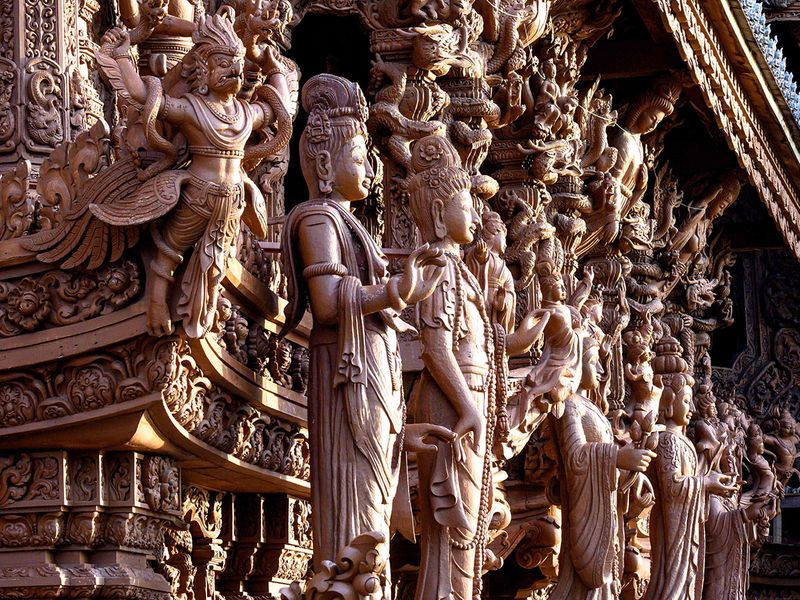
What makes the Sanctuary of Truth stand out is its unique construction from teak wood, an extremely durable and beautiful material that’s perfect for intricate carvings. At a height of 105 meters (344 feet), this wooden marvel is among the tallest wooden buildings in the world. Despite its massive size, the entire structure is held together without the use of a single nail, relying entirely on traditional craftsmanship techniques.

The Sanctuary of Truth

The temple blends elements of various Asian architectural styles, notably Thai, Cambodian, Burmese, and Indian, resulting in a design that is both distinct and harmonious. The design itself symbolizes the connection between humanity and the cosmos, with an array of spiritual themes reflected in the artwork.

At the heart of the structure lies the central spire, which towers above the temple and is adorned with sculptures of gods, angels, and other divine figures. This spire represents the central theme of the Sanctuary: the unity of the universe and the pursuit of truth.

Intricate Carvings: A Visual Journey into Spirituality

One of the most captivating aspects of the Sanctuary of Truth is the elaborate wood carvings that adorn its walls, ceilings, and columns. These carvings are not merely decorative; they are deeply symbolic, representing various religious and philosophical ideas from Hinduism, Buddhism, and other Eastern beliefs. The carvings depict everything from deities and mythical creatures to scenes of creation, life, and destruction.

The Sanctuary of Truth

Some of the key figures in the carvings include:

  • Lord Shiva: Symbolizing the god of creation and destruction in Hinduism.
  • Buddha: Depicting the path of enlightenment and spiritual awakening.
  • Angels and Apsaras: Divine beings bridging the spiritual and earthly realms.
  • Devas and Devis: Representing cosmic forces and celestial beings.

Each carving is meticulously crafted by hand, and many of the artisans continue to work on the temple’s artwork, contributing to its evolution.

Philosophical and Spiritual Significance

Beyond its architectural beauty, the Sanctuary of Truth serves as a spiritual journey for those who visit. The temple’s design is an embodiment of Eastern philosophical teachings. Its message revolves around the interconnectedness of all things—life, death, creation, destruction, and rebirth. The belief in karma and the cycle of existence is also depicted throughout the temple.

The Sanctuary of Truth

The temple’s philosophy encourages visitors to reflect on their place in the universe, embracing truth as a timeless pursuit that transcends the material world. The carvings and overall design invite you to consider the unity of all religions, the importance of wisdom, and the divine forces that govern life.

A Cultural Hub: Preserving Thai Heritage

The Sanctuary of Truth is not just a religious monument; it also serves as a cultural center for learning and appreciation of traditional Thai craftsmanship. Visitors can watch artisans at work, chiseling intricate carvings and constructing new sections of the temple. This makes the Sanctuary of Truth a living testament to Thailand’s rich artistic heritage.

Moreover, the temple's design and construction involve an interdisciplinary approach, blending art, architecture, philosophy, and craftsmanship into one unified vision. It's a place where Thai traditions are preserved, promoted, and celebrated.

Visitor Experience: A Serene and Awe-Inspiring Journey

The Sanctuary of Truth is open to visitors year-round, offering a chance to explore this majestic wooden structure up close. Upon arrival, you’ll immediately notice its towering spires and ornate carvings. The atmosphere is serene and reflective, with the temple’s tranquil surroundings providing the perfect environment for contemplation.

The Sanctuary of Truth

In addition to the temple itself, the surrounding gardens and views of the Gulf of Thailand make for an unforgettable experience. Visitors can stroll through lush gardens, enjoy the sound of birds chirping, and take in the scenic views of the ocean, all while marveling at the architectural grandeur of the temple.

Ongoing Construction: The Work in Progress

Although the Sanctuary of Truth has been under construction for over 40 years, the work is still far from finished. The temple is a continually evolving project, with new sculptures and structural elements being added regularly. Some estimates suggest that it may take several more decades before the temple is fully completed.

This ongoing construction only adds to the magic of the place, as it allows visitors to witness the craftsmanship in real-time. Every visit to the Sanctuary is a unique experience, as the temple evolves and transforms with each passing year.

Why Visit the Sanctuary of Truth?

  • Architectural Marvel: It is one of the tallest wooden buildings in the world and showcases stunning craftsmanship and design.
  • Cultural Insight: The temple offers a deep dive into Thai heritage and Eastern spirituality, with opportunities to watch artisans at work.
  • A Serene Escape: The calm and peaceful atmosphere provides the perfect environment for reflection and meditation.
  • A Living Monument: The temple is still under construction, making each visit a new experience as the structure continues to evolve.

Conclusion: A Monument to Human Creativity and Spirituality

The Sanctuary of Truth is much more than just a beautiful temple. It is a monument to human creativity, the pursuit of wisdom, and the universal search for truth. From its intricate wood carvings to its profound philosophical significance, the temple offers visitors a unique opportunity to reflect on life’s deeper questions while appreciating the beauty of Thai artistry.

A visit to the Sanctuary of Truth is an unforgettable experience, one that connects you to the heart of Thailand’s spiritual and cultural heritage. Whether you're an art lover, a spiritual seeker, or someone simply looking for a peaceful escape, the Sanctuary of Truth in Pattaya is a must-see destination.

The Sanctuary of Truth

The Sanctuary of Truth

The Sanctuary of Truth

The Sanctuary of Truth

The Sanctuary of Truth

Jun 7, 2021

Discover the Ultimate Luxury Experience at Seminole Hard Rock Hotel & Casino

Seminole Hard Rock Hotel & Casino  is a premier destination for entertainment, luxury accommodations, and gaming located in Hollywood, Florida. Known for its signature guitar-shaped hotel, it is a part of the larger Hard Rock International brand. 

Overview

The Seminole Hard Rock Hotel & Casino is one of the largest casinos in Florida, offering a range of activities, including world-class gaming, luxurious accommodations, fine dining, entertainment, and live shows. The resort is located just north of Miami and has become an iconic landmark, particularly thanks to its striking guitar-shaped hotel.

The Casino

  • Size & Games: The casino spans over 140,000 square feet and offers more than 3,100 slot machines and 190+ table games, including poker, blackjack, baccarat, and roulette.
  • High Limit Areas: There are exclusive high-limit gaming areas for VIP guests.
  • Poker Room: A large poker room hosts daily tournaments and cash games, catering to all levels of players.
  • Sports Betting: The casino includes a sportsbook, allowing guests to place bets on a variety of sports events.

Accommodations

  • Signature Guitar Hotel: The hotel’s centerpiece is its iconic 450-foot tall guitar-shaped building. It features over 600 rooms and suites, blending modern luxury with entertainment-inspired decor.
  • Luxury Suites: In addition to standard rooms, there are high-end suites offering panoramic views, exclusive amenities, and VIP services.
  • Hard Rock Hotel Rooms: Every room is equipped with high-end amenities, plush bedding, and entertainment options, such as large TVs, gaming consoles, and exclusive Hard Rock music content.
  • Pools and Spa: The hotel features a lavish pool area with waterfalls, private cabanas, and a luxurious spa offering various treatments.

Dining

The Seminole Hard Rock offers an impressive array of dining options:

  • Council Oak Steaks & Seafood: A fine-dining restaurant specializing in high-quality steaks, fresh seafood, and an extensive wine list.
  • Kuro: A contemporary Japanese restaurant known for sushi and fusion dishes.
  • The Big Fish: Casual dining for seafood lovers with a wide selection of fish and shellfish options.
  • Hard Rock Café: The iconic café offers a classic American menu with Hard Rock memorabilia, serving as both a restaurant and entertainment hub.
  • Additional Options: The resort offers numerous other eateries, from casual spots to upscale options, catering to a variety of tastes.

Entertainment

  • Live Concerts & Shows: The Hard Rock Event Center hosts major concerts, live music events, and comedy shows. Guests can enjoy performances by international stars and up-and-coming artists.
  • Seminole Hard Rock Live: A 7,000-seat venue offering a wide range of performances, from concerts to theatrical shows.
  • Nightlife: The resort features multiple bars and lounges, including a rooftop bar with breathtaking views and vibrant nightclubs like DAER Nightclub, providing an exciting nightlife scene.

Spa & Wellness

  • Rock Spa & Salon: A luxurious spa offering a variety of treatments, including massages, facials, and body wraps. Guests can also enjoy the salon services for hair, nails, and beauty treatments.
  • Fitness Center: The resort features a state-of-the-art fitness center for guests looking to stay active.

Meetings and Events

  • Event Spaces: With over 120,000 square feet of flexible meeting space, the Seminole Hard Rock Hotel & Casino is a popular venue for corporate events, conferences, weddings, and conventions.
  • Hard Rock Live Events: The venue offers not just entertainment but also custom-tailored events like corporate parties and themed gatherings.

Shopping

The Seminole Hard Rock has a number of luxury and lifestyle boutiques on-site, offering everything from high-end fashion to unique souvenirs. The shopping experience is catered to those looking for premium brands and exclusive products.

The Hard Rock's $1.5 billion property expansion project added a 450-foot (140 m) "Guitar Hotel" with 638 rooms and a seven-story 168-room "Oasis Tower" overlooking the pool cabanas these new buildings were scheduled to open on October 24, 2019, several months in advance of Super Bowl LIV being held in Miami on February 2, 2020. The expansion also included a 42,000-square-foot (3,900 m2) "Rock Spa", and over 20 new dining and nightlife destinations. Between the existing 12-story hotel, new Guitar Hotel, and new Oasis Tower, over 1,200 hotel rooms became available in October 2019.

On May 9, 2014, Seminole chairman James Billie announced a $100 million upgrade of the tribe's casinos, with much of that spent on the Hard Rock Hollywood location, including improved entryways, center pool bar, pool facility upgrades, updated hotel room and suite interiors, and a new restaurant. As of March 2019, the tribe's upgrade budget was significantly increased to over $2.4 billion, split mainly between this location and the Seminole Hard Rock Hotel and Casino Tampa.
 

 Attractions Nearby

  • Hollywood Beach: Just a short drive from the resort, Hollywood Beach offers a relaxing coastal getaway with a broadwalk and oceanfront activities.
  • Shopping & Dining: The area surrounding the Hard Rock Hotel includes upscale shopping districts, dining options, and attractions, making it a great base for exploring Miami-Dade and Broward County.

Sustainability and Philanthropy

The Seminole Hard Rock Hotel & Casino is involved in various sustainability and community initiatives. From energy-efficient practices to supporting local charities, the resort focuses on giving back to the community and promoting a positive environmental impact.

 Special Events & Seasonal Highlights

The Seminole Hard Rock Hotel & Casino hosts numerous special events throughout the year, ranging from concerts to cultural celebrations, holidays, and themed festivals. Here's an overview of what visitors can expect:

  • Rock Royalty Weekends: Periodic special weekends that offer exclusive VIP experiences for guests, including meet-and-greets with celebrities, special concerts, and high-end dinners.
  • Seasonal Concerts: The resort regularly schedules major concerts, especially during spring break and holiday seasons, attracting large crowds with big-name performers. Guests can check the event calendar for dates and ticket availability.
  • New Year’s Eve Celebrations: The Hard Rock features massive countdown parties, with live music, spectacular fireworks displays, and high-energy performances to ring in the new year.
  • Holiday Events: The resort also celebrates the festive season with elaborate decorations, themed parties, and family-friendly activities. From Thanksgiving feasts to Christmas events, there’s always something to look forward to.
  • Poker Tournaments: The poker room often hosts large tournaments, including regional events and qualifiers for major competitions, offering significant cash prizes and prestige.

VIP & Loyalty Programs

For frequent visitors, the Rock Royalty program offers exclusive benefits that provide a truly elevated experience. Here are some perks for members:

  • VIP Access: Premium guests can enjoy private check-ins, priority reservations, and access to exclusive areas such as VIP lounges, private gaming rooms, and special events.
  • Loyalty Rewards: The Seminole Players Club allows guests to earn points while gaming, which can be redeemed for rewards like free play, dining credits, hotel stays, and more. The more you play, the more you earn.
  • Concierge Services: For those seeking a more personalized experience, the resort provides a dedicated concierge service to assist with booking exclusive experiences, arranging private dinners, or planning special celebrations.

Family-Friendly Features

While the Seminole Hard Rock Hotel & Casino is renowned for its adult-oriented entertainment, it also offers plenty of activities and amenities for families:

  • Kid-Friendly Pools: The pool area features a variety of kid-friendly options, including shallow pools, water slides, and a fun environment for families.
  • Hard Rock for Kids: For younger guests, there are music-themed activities and experiences available, allowing them to engage in fun, interactive learning about music and entertainment.
  • Family Entertainment: The hotel often hosts family-friendly events such as movie nights, poolside games, and special performances for children.
  • Nearby Beaches: The proximity to Hollywood Beach offers families a chance to enjoy sun and sand, with watersports, walking paths, and playgrounds.

Gaming Options Beyond the Casino

While the casino is a central feature, there are additional gaming and entertainment options available:

  • Slot Machines: Featuring the latest in slot machine technology, guests can try their luck on hundreds of machines with various themes, payout options, and jackpots.
  • Table Games: For those who prefer skill-based gaming, there are numerous table games like poker, blackjack, craps, and baccarat. The casino also offers unique variations and tournaments to keep things interesting.
  • Bingo: For a more laid-back but exciting gaming experience, guests can try their hand at bingo. The bingo hall offers daily games with both cash prizes and themed events.
  • Virtual Reality Gaming: Some areas of the resort now offer immersive experiences with virtual reality (VR) gaming setups, blending the latest in gaming technology with classic fun.

Exclusive Experiences

For those seeking to make their visit even more unforgettable, the Seminole Hard Rock offers several unique experiences that are perfect for luxury-seekers:

  • Private Cabana Rentals: Guests can rent exclusive cabanas at the pool, providing privacy, luxury service, and prime relaxation spots with features like flat-screen TVs, personal attendants, and snack service.
  • Helicopter Tours: For those looking to explore beyond the resort, helicopter tours are available, offering stunning views of the South Florida coast and Miami skyline.
  • Golf & Sports: The resort is close to a number of premium golf courses and sports facilities. Guests can arrange golf outings or enjoy private lessons with professional instructors.

Sustainability and Green Initiatives

The Seminole Hard Rock Hotel & Casino has embraced sustainable practices aimed at reducing its environmental impact while maintaining luxury service. Some key green initiatives include:

  • Energy-Efficient Design: The resort's design includes eco-friendly elements, such as energy-efficient lighting and HVAC systems, to minimize its carbon footprint.
  • Waste Reduction: The property has committed to reducing waste by recycling materials and offering guests the option to participate in sustainability programs.
  • Sustainable Dining: Many of the restaurants at the resort focus on sustainable sourcing, offering locally grown produce, responsibly caught seafood, and organic ingredients when possible.
  • Water Conservation: The property employs water-saving technologies in its landscaping, hotel amenities, and guest rooms.

Nearby Attractions

The Seminole Hard Rock Hotel & Casino’s prime location places it within easy reach of a variety of South Florida attractions:

  • Miami: Just a short drive away, Miami offers visitors vibrant nightlife, art districts, museums, cultural attractions, and more.
  • Everglades National Park: Nature lovers can take a day trip to the Everglades, one of Florida’s most iconic ecosystems, for airboat tours, wildlife viewing, and birdwatching.
  • Fort Lauderdale: Just a 20-minute drive away, Fort Lauderdale is famous for its beautiful beaches, shopping centers like Las Olas Boulevard, and dining hotspots along the waterways.
  • Museums & Art: South Florida is home to several renowned museums, including the Perez Art Museum Miami (PAMM) and the Museum of Discovery and Science in Fort Lauderdale.

Insider Tips for Visitors

  • Best Time to Visit: While the Hard Rock is a popular year-round destination, visiting during the off-season (late spring or fall) will allow you to avoid large crowds and get the best deals on accommodations.
  • Reservations: For fine dining and special events, it’s highly recommended to make reservations ahead of time to secure a spot.
  • Parking: The resort offers both valet and self-parking options, but valet is the most convenient for first-time visitors. Be sure to check for parking rates, as they may vary during peak times.
  • Pack for Fun: Guests can bring their swimwear for the pool and resort activities, but don’t forget to pack formal attire for the upscale dining venues and events.
  • Gaming Budget: If you plan to spend time in the casino, set a budget for yourself and enjoy the variety of gaming options without breaking the bank.

Conclusion

Whether you're seeking a thrilling gaming experience, a relaxing spa day, an unforgettable concert, or simply a luxurious escape, the Seminole Hard Rock Hotel & Casino offers it all. With its combination of world-class facilities, diverse entertainment, and top-notch service, it remains one of Florida's premier destinations for both tourists and locals alike. From luxury accommodations to non-stop fun and adventure, this is more than just a hotel or casino; it’s a complete entertainment experience that caters to all types of visitors.This extended information should provide your readers with a well-rounded view of everything the Seminole Hard Rock Hotel & Casino has to offer, making it the perfect destination for your next getaway.


Jonathan the Tortoise: A Story of Longevity and Resilience


Jonathan, In a world of ever-changing technology, fast-paced living, and fleeting moments, there exists a rare figure whose life spans almost two centuries a tortoise named Jonathan. Born around 1832, Jonathan holds the distinction of being the oldest known living land animal, having witnessed the rise and fall of empires, global transformations, and countless generations of humans and animals. His story isn’t just about surviving; it’s about thriving through history, embodying the incredible resilience of nature.

Jonathan

Meet Jonathan: The Oldest Known Tortoise

  • Basic Facts: Jonathan is a Seychelles giant tortoise, born around 1832, making him well over 190 years old (as of 2024). He resides on Saint Helena, a small island in the South Atlantic Ocean, a British Overseas Territory.
  • Historical Context: Jonathan was already an adult when he arrived on Saint Helena in the 1880s. This means he has witnessed more than a century of global changes.

A Century of Changes: What Jonathan Has Seen

  • Historical Events: Mention some of the significant historical milestones Jonathan has lived through, such as:
    • The reign of Queen Victoria
    • The world wars
    • Technological revolutions (such as the invention of the airplane, the internet)
    • The independence of various nations
  • Scientific Significance: Tortoises, especially the Seychelles species, are significant in terms of scientific study, as they offer insights into aging, conservation efforts, and biodiversity.
Jonathan


Jonathan's Daily Life on Saint Helena

  • Habitat: Jonathan resides in the Government House garden on Saint Helena, a lush environment with plenty of space to roam. His daily life includes basking in the sun, eating plants, and interacting with the local community.
  • Diet: Tortoises typically have a vegetarian diet, feeding on grasses, flowers, and various plants. Jonathan enjoys a diet rich in native vegetation of Saint Helena, though he has some favorites!
  • Interaction with Visitors: Many tourists and locals enjoy visiting Jonathan, who is often seen as a symbol of endurance. Some even believe that petting Jonathan brings good luck!

Conservation Importance of Tortoises

  • Endangered Species: The Seychelles giant tortoise, like many other tortoise species, is endangered. Jonathan’s longevity helps raise awareness about the need for tortoise conservation worldwide.
  • Tortoise Conservation Efforts: Discuss the efforts made to protect tortoises and their habitats, including breeding programs, wildlife reserves, and the role of tortoises in maintaining healthy ecosystems.

Jonathan's Health and Care

  • Veterinary Care: Jonathan is regularly checked by veterinarians, and despite his old age, he remains relatively healthy. While he is not as active as in his youth, he still enjoys the company of other tortoises.
  • Challenges of Aging: Tortoises, like humans, face challenges as they age. Jonathan has experienced some vision loss, but he continues to get around well. His keepers ensure that he’s well cared for and comfortable.


The Mystique of Tortoises and Their Longevity

  • Why Do Tortoises Live So Long?: Discuss the science behind the longevity of tortoises, including their slow metabolism and low activity levels. Tortoises have one of the longest lifespans among land animals.
  • The Role of Genetics: Explain how Jonathan's long life might be due to a combination of genetics, environment, and good care over the years.

Jonathan’s Legacy

  • Global Icon: Jonathan’s story has inspired people worldwide. His longevity serves as a reminder of the importance of conserving endangered species and appreciating the beauty of nature.
  • Lessons from Jonathan: What can humans learn from Jonathan’s long life? Perhaps themes of patience, resilience, and the value of taking life slow.

The Science of Longevity: Why Tortoises Live So Long

  • Slow Metabolism: Tortoises are known for their exceptionally slow metabolism, which is one of the key reasons for their long lifespans. This slow metabolism allows them to conserve energy and live for many years. Their slow pace of life is a hallmark of their species and one of the reasons why they can live for so long.
  • Genetics and Adaptation: Jonathan’s longevity is partly due to his genetics. In addition, the tortoise's natural habitat and lifestyle contribute to their lifespan. Their diet, low stress levels, and absence of predators in their environment help increase their chances of living well beyond what many other species can achieve.
 
jonathan
  • The Mystery of Aging: Scientists continue to study tortoises like Jonathan to unlock the secrets of aging. Their resilience to disease and injury, combined with their prolonged life expectancy, offers insights into aging and how organisms can live long, healthy lives.

Jonathan in the Digital Age: A Global Icon

  • Media Attention: Jonathan's story has been featured in documentaries, news articles, and online platforms, making him a global icon. His age and status have made him a favorite subject for wildlife photographers, and he has garnered significant attention on social media.
  • Educational Value: Jonathan's story has become an educational tool in conservation efforts. Schools, museums, and nature programs use his life as an example of the importance of protecting biodiversity, understanding natural habitats, and maintaining the delicate balance of ecosystems.

Conclusion

What Jonathan Teaches Us As Jonathan the tortoise continues to live a life beyond the imagination of most humans, we can reflect on the lessons his existence offers. From the importance of slow, steady resilience to the value of protecting endangered species and ecosystems, Jonathan serves as a beacon of wisdom and endurance. His story is a testament to the incredible creatures that share our world and to the natural wonders we must protect. Through Jonathan’s eyes, we are reminded of the wonders of nature and the slow, steadfast march of time.

jonathan

jonathan

Jun 6, 2021

Beehive Ginger: Nature’s Unique Beauty and Benefits

Beehive ginger (Zingiber zerumbet) is a unique and visually striking plant that belongs to the ginger family (Zingiberaceae). It's often called " shampoo ginger" due to its interesting sap-producing rhizomes, which have been used in traditional cultures for centuries as a natural cleanser for hair. This tropical perennial is not just useful, but its distinctive appearance and fascinating characteristics make it an attractive addition to gardens, both in its native regions and beyond. In this blog, we will explore every detail about beehive ginger, from its appearance to its medicinal properties and uses.

Beehive Ginger

Botanical Overview

  • Scientific Name: Zingiber zerumbet
  • Common Names: Beehive ginger, Shampoo ginger, Wild ginger, and Pinecone ginger
  • Family: Zingiberaceae (Ginger family)
  • Native Regions: Native to Southeast Asia, but it can be found in tropical regions around the world, including Hawaii, the Caribbean, and parts of Africa.
  • Growing Zones: USDA hardiness zones 9b-11.

Physical Description

Beehive ginger is a striking plant known for its unusual and attractive appearance. The plant can reach a height of 3 to 5 feet (1-1.5 meters), depending on growing conditions. Here’s what makes it visually interesting:

  • Rhizomes: The plant’s underground rhizomes (roots) are knobby and thick. The main attraction is the beehive-like structure of the flowering cone. These cones are usually a reddish, yellow, or orange color and resemble the shape of a honeycomb or beehive, hence the name.

  • Flowers: The flowers of Zingiber zerumbet grow in these cylindrical cones, typically found at the top of the plant. These blooms are small, pale yellow to white, and inconspicuous compared to the larger, more eye-catching cones.

  • Leaves: The plant has large, glossy, broad, lance-shaped leaves that can grow up to 2 feet long. The leaves grow in an attractive spiral formation along the stalk.

  • Scent: When crushed, the leaves release a fragrant, ginger-like aroma that can be both spicy and citrusy.

    Beehive Ginger

Cultural Significance and Traditional Uses

Beehive ginger has been widely used in different cultures for various practical and medicinal purposes:

  • Shampoo: One of the most unique features of beehive ginger is its use in hair care. The plant’s rhizomes contain a viscous, gel-like sap that, when squeezed, is used as a natural shampoo. In Hawaiian culture, it is often used to cleanse and condition the hair. This sap is rich in saponins, which have soap-like properties, making it an effective cleanser.

  • Medicinal Uses: In traditional medicine, beehive ginger is used to treat a variety of ailments. The rhizome is believed to have anti-inflammatory and analgesic properties. It is used for pain relief, digestive problems, and to treat wounds. Some also use it to treat colds, sore throats, and skin conditions.

  • Ritual and Ceremonial Uses: In some Southeast Asian cultures, the plant is used in rituals for protection or purification. The rhizomes are sometimes burned, and the smoke is believed to ward off evil spirits.

Growing Beehive Ginger

Beehive ginger thrives in tropical and subtropical climates, and it is relatively easy to grow if the right conditions are provided. Here’s how you can grow your own beehive ginger plant:

Soil and Location

  • Beehive ginger prefers well-drained, rich, and slightly acidic soil. It can tolerate a variety of soil types, but the ideal pH is between 5.5 and 6.5.
  • Choose a location that receives partial to full shade, as the plant does not do well in direct sunlight, especially in hot climates.
Beehive Ginger

 Watering

  • This plant thrives in a humid environment and requires consistent moisture. However, be cautious of water logging, as it may lead to root rot.

Temperature

  • Beehive ginger thrives in warm temperatures and humidity. Ideal growing temperatures range from 70°F to 90°F (21°C - 32°C).

Propagation

  • Beehive ginger is usually propagated through rhizomes. These can be divided during the growing season. Cut the rhizomes into smaller pieces, ensuring each piece has at least one bud or growing eye.

Care

  • Regularly trim back dead or damaged leaves to encourage healthy growth.
  • Fertilize the plant once or twice during the growing season with a balanced fertilizer to support robust growth.

Flowering and Harvesting

  • Beehive ginger typically flowers during the warmer months, with the rhizomes being ready to harvest once the plant matures. The rhizomes can be harvested for use in medicinal or cosmetic applications.

Uses of Beehive Ginger

  • Culinary Uses: The fresh rhizomes of beehive ginger can be grated and used in cooking. Its flavor is similar to that of other ginger species, though it's more subdued and mild. It can be used in soups, curries, or tea, and in some cultures, it is pickled or preserved for later use.

  • Cosmetic Uses: The gel-like substance extracted from the rhizomes is often used as a natural shampoo, conditioner, or body wash. It can cleanse the scalp, remove dirt and oils, and leave the hair feeling soft and healthy.

  • Essential Oils: Beehive ginger is sometimes used in the production of essential oils. These oils can be used in aromatherapy or as part of massage oils.

Medicinal and Health Benefits

Beehive ginger is believed to have several potential health benefits:

  • Anti-inflammatory: The plant is thought to have anti-inflammatory properties and may help with conditions like arthritis and muscle pain.

  • Digestive Health: Like other ginger species, beehive ginger may help alleviate digestive issues like nausea, indigestion, and bloating.

  • Skin Healing: The sap and rhizomes are sometimes applied topically to wounds or skin irritations due to their potential antimicrobial and soothing properties.

  • Pain Relief: The plant has been used in traditional medicine to relieve headaches, sore muscles, and menstrual pain.

  • Antioxidant Properties: Beehive ginger contains antioxidants that may help combat oxidative stress and promote overall well-being.

Environmental and Ecological Impact

While beehive ginger is a striking and useful plant, it is essential to be aware of its environmental impact. In some regions, such as Hawaii, it has been reported as an invasive species, potentially competing with native plants. As with any plant species, it’s crucial to consider local ecosystems before introducing it to non-native areas.

Conclusion

Beehive ginger is a fascinating plant that offers not only a unique visual appeal but also a host of benefits, from its use in natural shampoos to its medicinal properties. It thrives in tropical environments and can be a valuable addition to any garden or herbal collection. Whether you’re looking for a natural beauty product or interested in its traditional uses, beehive ginger has something to offer. Its easy cultivation, versatility, and cultural significance make it a remarkable plant in both horticultural and practical terms.

Beehive Ginger

Beehive Ginger