Gangotri is located in the majestic Garhwal Himalayas of Uttarakhand, Gangotri is one of the holiest pilgrimage sites in India. Revered as the origin of the sacred Ganges River, Gangotri holds immense religious and spiritual significance for Hindus. The serene landscapes, ancient temples, and divine atmosphere make it a must-visit destination for devotees and nature lovers alike.
Gangotri is a town and a Nagar Panchayat (municipality) in Uttarkashi district in the state of Uttarakhand, India. It is 99 km from Uttarkashi, the main district headquarter. It is a Hindu pilgrim town on the banks of the river Bhagirathi – the origin of the river Ganges. The town is located on the Greater Himalayan Range, at a height of 3,100 metres (10,200 ft). According to a popular Hindu legend, the goddess Ganga descended here when Shiva released the mighty river from the locks of his hair.
Visiting Gangotri isn’t merely a journey; it is a soulful reflection.
The icy Ganges whisper ancient truths here, and the Himalayas are silent
witnesses. Gangotri weaves them into a tapestry of fulfillment whether
you seek blessings, solace, or adventure.
The outskirts of Gangotri are dotted with several other attractions
worth exploring. The tranquil town of Harsil, known for its apple
orchards and serene beauty, provides a perfect detour. Nearby, the
serene Sattal, or Seven Lakes, offers a peaceful retreat surrounded by
pine and oak forests. For those interested in high-altitude trekking,
the Kedartal Trek presents a more challenging but rewarding option, with
its crystal-clear lake set against towering peaks. The surrounding area
boasts a rugged terrain adorned with verdant forests, sprawling
meadows, and craggy peaks.

The legend of Gangotri is intertwined with the Ganges, India's most
sacred river. According to Hindu mythology, King Bhagirath performed
penance here, pleading with the gods to bring the river Ganges down from
the heavens to absolve the sins of his ancestors. Lord Shiva, moved by
his devotion, caught the river in his matted locks to break its descent,
saving the earth from its immense force. Gangotri today houses the
revered Gangotri Temple,
dedicated to Goddess Ganga, marking where she is believed to have
touched the earth. Thousands of devotees’ pilgrimage to this holy site
each year, especially during the auspicious months of May to June and
September to November, seeking blessings and purity.
The journey to Gangotri itself is as captivating as the destination. The
winding roads travel through lush forests and over rugged mountains,
offering panoramic views of the Himalayas. The journey typically begins
in the town of Rishikesh or Haridwar, leading travelers through the
towns of Uttarkashi and finally to Gangotri. Along the way, visitors are
treated to breathtaking landscapes, including verdant valleys and
gushing waterfalls, which invite moments of reflection and admiration.
Significance of Gangotri:
According to Hindu mythology, the Ganges River descended from heaven to earth at Gangotri, thanks to the penance of King Bhagirath. It is believed that Goddess Ganga took the form of a river to cleanse the sins of Bhagirath’s ancestors. The Gangotri Temple, dedicated to Goddess Ganga, stands as a testament to this celestial event. The temple, built in the 18th century by Amar Singh Thapa, is an important stop for pilgrims undertaking the Chota Char Dham Yatra.
Gangotri is one of the four sites in the Chota Char Dham pilgrimage circuit. It is also the origin of the Ganges river and, per Hinduism, the seat of the goddess Ganga. The source of the Ganges river is the Bhagirathi River, originating from the Gangotri Glacier. Once the river confluences with the Alakananda River at a town called Devprayag it finally acquires the name Ganga.
Near the river is a stone where King Bhagiratha performed penance to Shiva in order to bring the Ganga down to earth and absolve the sins of his ancestors. According to another legend, Pandavas performed the great 'Deva Yajna' here to atone the deaths of their kinsmen in the epic battle of the Mahabharata. Hindus believe that performing the ancestral rites on the banks of Bhagirathi frees the spirit of the ancestor from the cycle of rebirth and a holy dip in its waters cleanses sins committed in the present also past births
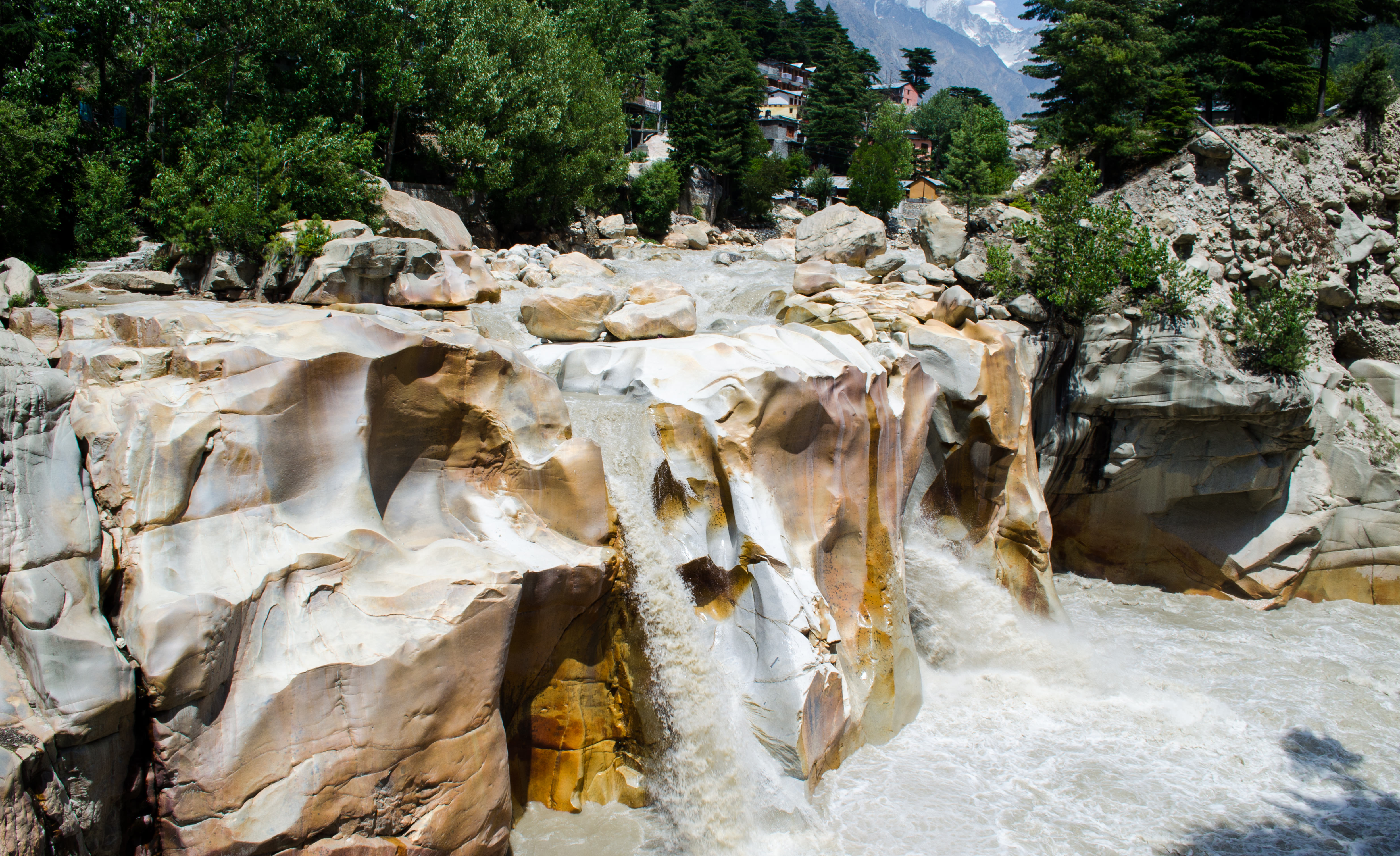
Geographical and Climatic Features:
Gangotri is situated at an altitude of approximately 3,100 meters (10,200 feet) above sea level. The town is surrounded by snow-capped peaks, lush green valleys, and the pristine Bhagirathi River, which later merges with the Alaknanda to form the Ganges. Due to its high altitude, Gangotri experiences cold weather throughout the year, with heavy snowfall during winter, making it accessible only from April to November.
Major Attractions in and Around Gangotri:
Gangotri Temple – The main pilgrimage site dedicated to Goddess Ganga.
Gaumukh Glacier – The actual source of the Bhagirathi River, around 18 km from Gangotri, is a significant trekking destination.
Pandava Gufa – A cave believed to have been used by the Pandavas during their journey to the Himalayas.
Bhojbasa – A scenic camping site on the way to Gaumukh, offering stunning Himalayan views.
Tapovan – A high-altitude meadow known for its breathtaking beauty and spiritual significance.
Trekking and Adventure Opportunities:
Gangotri serves as a base camp for several trekking expeditions. The Gaumukh-Tapovan trek is one of the most popular trails, offering mesmerizing views of Mt. Shivling and other Himalayan peaks. Other treks like Nandanvan and Vasuki Tal attract adventure enthusiasts seeking thrilling experiences amidst nature.
The Trek to Gaumukh from Gangotri
Gangotri is a spiritual haven and a starting point for trekkers and
adventure seekers. The trek to Gaumukh, the source of the river Ganges,
is one of the most popular treks in the region. This trek offers an
unparalleled opportunity to witness the rugged beauty of the Himalayas
up close. The path takes you through dense forests, bridges, and rocks,
with the Bhagirathi Peaks towering overhead. The sight of Gaumukh
Glacier, a snout of the Gangotri Glacier from which the Bhagirathi River
flows, is both humbling and spectacular.
The trek covers approximately 18 kilometers (around 11 miles) and takes
you to an elevation of about 4,000 meters (around 13,123 feet). The path
is well-marked but rugged, challenging trekkers to navigate through
rocky terrains, boulder-strewn trails, and narrow passes, surrounded by
the majestic Himalayan peaks. The trek is usually completed over 1-2
days, with options for camping along the route, allowing trekkers to
immerse themselves fully in the natural beauty of their surroundings.
One of the most striking features of this trek is the constantly
evolving landscape. From the lush greenery of the Gangotri National Park
to the stark, rugged beauty of the Himalayan mountains, each turn
presents a new vista to marvel at. The park is home to a rich variety of
flora and fauna, including rare species such as the blue sheep and the
Himalayan monal, adding to the trek's appeal for nature enthusiasts. As
travelers tread softly on its hallowed grounds, they encounter diverse
flora and fauna, including rare species like the snow leopard, Asiatic
black bear, and the blue sheep, enhancing the park's wild allure.
The ultimate destination, Gaumukh, meaning “cow's mouth,” is where the
trek transcends its physical challenges to reach a spiritual
culmination. This is where the Bhagirathi River emerges from the
Gangotri Glacier. This glacier, one of the primary sources of the
Ganges, is a sight to behold. Its vast expanse of ice and snow, set
against the backdrop of towering peaks, is profoundly humbling and a
powerful reminder of nature's greatness. For many, reaching Gaumukh is a
moment of profound spiritual significance. It is a place to meditate,
pray, and connect deeply to the divine. The tranquility and purity of
the surroundings invigorate the soul, offering peace and renewal.
However, this trek is not without its challenges. The high altitude and
rough terrain require good physical fitness and preparation.
Acclimatization to the altitude is essential to prevent altitude
sickness, and trekkers must be well-equipped with the right gear and
supplies. Despite these challenges, the journey to Gaumukh is rewarding,
offering a blend of adventure, spirituality, and unparalleled natural
beauty.

How to Reach Gangotri:
By Air: The nearest airport is Jolly Grant Airport in Dehradun, about 250 km away.
By Rail: The closest railway station is in Rishikesh, around 230 km from Gangotri.
By Road: Gangotri is well-connected by motorable roads, with buses and taxis available from major cities like Dehradun, Rishikesh, and Haridwar.
Best Time to Visit:
The ideal time to visit Gangotri is between May and June or September and October. During these months, the weather is pleasant, and the temple remains open for devotees. The monsoon season (July-August) should be avoided due to landslides and unpredictable weather.
Conclusion:
Gangotri is not just a pilgrimage site; it is a place of spiritual awakening, natural beauty, and adventure. Whether you seek divine blessings, explore pristine landscapes, or embark on thrilling treks, Gangotri has something for everyone. A visit to this sacred town is a journey of faith, devotion, and discovery.


No comments:
Post a Comment
Stay updated with our blog for more quality content! Your feedback is appreciated. Contact us at harshrex@outlook.com with any suggestions.