Apr 20, 2021

The Hanging Temple, Mount Heng in Hunyuan County, Datong City, Shanxi Province, China

The Hanging Temple, also Hengshan Hanging Temple, Hanging Monastery or Xuankong Temple is a temple built into a cliff (75 m or 246 ft above the ground) near Mount Heng in Hunyuan County, Datong City, Shanxi Province, China. The closest city is Datong, 64 kilometres (40 mi) to the northwest. Along with the Yungang Grottoes, the Hanging Temple is one of the main tourist attractions and historical sites in the Datong area. Built more than 1,500 years ago, this temple is notable not only for its location on a sheer precipice but also because it is the only existing temple with the combination of three Chinese traditional religions: Buddhism, Taoism, and Confucianism. The structure is kept in place with oak crossbeams fitted into holes chiseled into the cliffs. The main supportive structure is hidden inside the bedrock. The monastery is located in the small canyon basin, and the body of the building hangs from the middle of the cliff under the prominent summit, protecting the temple from rain erosion and sunlight. Coupled with the repair of the dynasties, the color tattoo in the temple is relatively well preserved. 


According to legend, construction of the temple was started at the end of the Northern Wei dynasty by only one man, a monk named Liaoran. Over the next 1,400 years, many repairs and extensions have led to its present-day scale.

The design and site selection of Hanging Temple is another important reason for its preservation. It's located at the inward concave of the cliff and the protruding part is like an umbrella, which makes the temple free from the impact of rain and falling rocks. The high position of the temple also avoids the risk of being flooded.

The entire 40 halls and pavilions are all built on cliffs which are over 30 metres (98 ft) from the ground. The distance from north to south is longer than from east to west and it becomes higher and higher from the gate in the south to north along the mountain. With brief layout, it includes the Qielan Hall (Hall of Sangharama), Sanguan Hall (Hall of Three Officials),  Chunyang Hall, Hall of Sakyamuni, Hall of Three Religions and Guanyin Hall.


The Hall of Three Religions mainly enshrines Buddhist deities as well as both Taoism and Confucianism. The statues of Sakyamuni (middle), Lao-Tze (left) and Confucius (right) are enshrined in the hall. This reflects the prevailed idea of Three Teaching Harmonious as One in the Ming and Qing dynasties (1368–1911).

Interestingly, this historical site enshrines not just one religion, but three: Buddhism, Taoism and Confucianism are all practiced within the ancient monastery. In the Sanjiao or Three Religions Hall, a Buddha sits alongside statues of Lao Zi and Confucius, the founders of Taoism and Confucianism. This demonstrates that there was harmony among religions even centuries ago in China. As a transit station for people journeying through Datong's remote terrain, the temple catered to anyone, whatever their belief. With its historical impact and jaw-dropping scenery, the Hanging Temple of Datong is not only an engineering miracle, but also a beautiful testament to the ingenuity of our forefathers. 

As a historical site, the Hanging Temple is available to visit all year round. But considering Datong in winter is relatively cold and there will be more tourists in July and August, it is most recommended to travel here from March to mid-June and mid-September to November. Best time to visit in a day: To protect the temple, the number of visitors is limited at 80, which means when there are 80 people in the temple, you need to wait until someone comes down from the temple and then you are allowed to go up there. Therefore, it is recommended to visit the Hanging Temple in the morning and be one of the first batch of 80 people, or it is normal to wait in line for 1-2 hours.

Apr 18, 2021

Ilha da Queimada Grande: The Mysterious Snake Island of Brazil

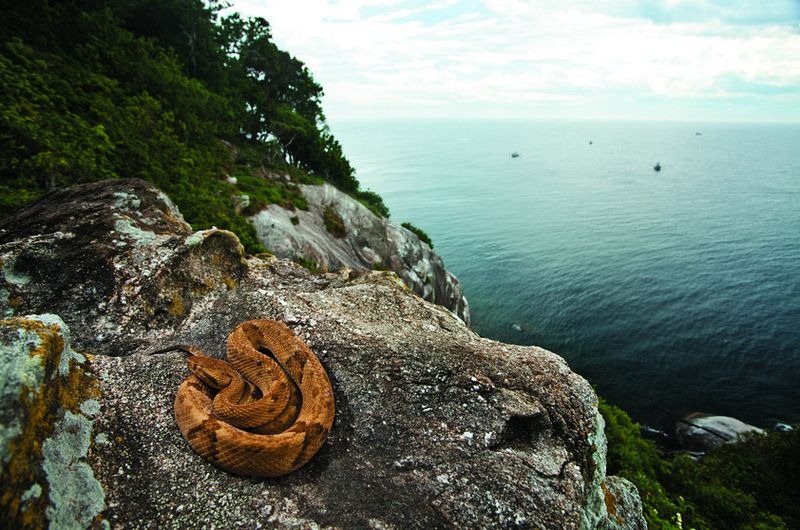
Ilha da Queimada Grande also known as Snake Island, is one of the most isolated and dangerous places on Earth. Located off the coast of Brazil, about 33 kilometers (20 miles) from the mainland, this small island has gained worldwide notoriety due to its unique ecosystem, and most famously, its dense population of venomous snakes. Here’s an in-depth look into this mysterious island that has captured the curiosity of adventurers, scientists, and tourists alike.

Snake Island

Geography and Location

Ilha da Queimada Grande spans just 43 hectares (106 acres), making it a relatively small piece of land in the Atlantic Ocean. It is situated off the coast of São Paulo, Brazil, and is part of a chain of islands in the Atlantic. The island's name, "Queimada Grande," translates to "Big Burning Island" in Portuguese, although the exact origin of the name remains unclear. One popular theory suggests that the name may refer to the early settlers’ practice of setting fires to clear the land, but the island’s current reputation is more related to its dangerous wildlife.

The Snakes: Golden Lancehead Pit Vipers

The island is most famous for being home to one of the most venomous snakes in the world: the Golden Lancehead pit viper (Bothrops insularis). This snake species is found nowhere else on Earth, making Ilha da Queimada Grande the only natural habitat of these deadly creatures.

  • Venomous and Dangerous: The Golden Lancehead is particularly dangerous due to its potent venom, which can cause severe tissue damage, bleeding, and in some cases, death. However, deaths from snake bites are rare, as access to the island is highly restricted.

    Snake Island

  • Adaptations: Over thousands of years of isolation, the Golden Lancehead evolved to be larger and more aggressive than its mainland cousins. The snakes grow up to 70 cm (27 inches) long on average, though some individuals can reach lengths of over a meter (3.3 feet). Their venom is also more potent, enabling them to take down larger prey, such as migrating birds.

Wildlife and Flora

While snakes dominate the island, Ilha da Queimada Grande is also home to a variety of unique wildlife and plant life. The island’s isolation has led to the development of a distinct ecosystem, with several species of plants and insects adapted to the harsh, snake-infested environment.

  • Birdlife: Despite the snakes, birds are still drawn to the island, especially during migration periods. The island’s location makes it an important stopover for many species. The Golden Lancehead feeds on these birds, which may be a key factor in the snake's evolution and survival.

  • Vegetation: The island's plant life is mainly tropical, including shrubs, small trees, and vines, which provide shelter for the snakes and other wildlife. The dense vegetation can make it challenging to traverse the island.

Human Interaction and Access Restrictions

Due to the high concentration of venomous snakes, Ilha da Queimada Grande has been off-limits to the general public for many years. The Brazilian government has enforced strict regulations to prevent unauthorized access, and the island is only accessible to researchers or trained professionals with special permits.

  • History of Human Presence: In the past, Ilha da Queimada Grande was used by lighthouse keepers, but these days, the Brazilian Navy controls access to the island. In the 1920s, a lighthouse was established on the island to guide ships in the area, and a few families were sent to live there to maintain the lighthouse. However, the dangerous snake population made living on the island unsustainable, and the lighthouse keepers were eventually evacuated.

  • Controversy and Unpermitted Visits: Some adventurers and thrill-seekers have tried to visit the island despite the restrictions. However, this is illegal, and the Brazilian authorities take trespassing seriously, issuing hefty fines or even prison sentences for unauthorized visits. The dangers posed by the snakes make it a perilous undertaking even for the most experienced explorers.

    Snake Island

Conservation Efforts and the Role of Scientists

Researchers have been studying Ilha da Queimada Grande's ecosystem for many years. The focus is mainly on the Golden Lancehead pit viper and its adaptations, as well as the role the island plays in the broader context of island ecology.

  • Snake Research: Scientists are particularly interested in understanding the snakes' unique venom and their feeding behaviors. Studies have shown that the snakes rely heavily on migratory birds for sustenance, which has prompted interest in how the changing global climate might impact both the snakes and the birds.

  • Conservation Issues: Although the snakes are dangerous, they are also an important part of the island's ecosystem. With limited human interference, the island remains relatively undisturbed. The main conservation challenge is balancing the protection of the island’s delicate ecosystem with the need for scientific study.

Legends and Myths

The terrifying reputation of Ilha da Queimada Grande has given rise to numerous myths and legends. The stories of an island filled with snakes have sparked imaginations around the world, and the real dangers of the Golden Lancehead only add to the mystery. Some believe that the island is cursed or haunted, adding a layer of supernatural intrigue to its already menacing reputation.

Snake Island

  • A Warning for Tourists: While it might be tempting to visit an island with such a unique and dangerous appeal, the government strictly warns against unauthorized trips. The combination of aggressive wildlife and difficult terrain makes Ilha da Queimada Grande a no-go zone for most people. The danger of encountering a snake, coupled with the lack of emergency services, makes visiting the island a highly risky endeavor.

The Future of Ilha da Queimada Grande

Looking ahead, the future of Ilha da Queimada Grande is uncertain. While the island remains a source of fascination for scientists and thrill-seekers alike, its isolation and hazardous wildlife continue to limit human interaction. As conservation efforts grow and more is learned about the Golden Lancehead and its ecosystem, Ilha da Queimada Grande may hold important lessons for biodiversity, adaptation, and survival.

However, for now, it remains a forbidden and mysterious land, shrouded in danger and intrigue—a reminder of nature’s power and the fine balance between preservation and exploration.

Snake Island

Geological and Evolutionary Background

Ilha da Queimada Grande is not just interesting for its wildlife; the island’s formation and isolation have shaped its current ecosystem. Understanding the geological history of the island and how the animals evolved provides further insight into its uniqueness.

Geological Formation: The island was likely formed millions of years ago during the Cretaceous period, around 80 million years ago, as part of a larger archipelago. Over time, the rising sea levels created isolated landmasses, and Ilha da Queimada Grande became cut off from the mainland, contributing to the distinct evolution of the Golden Lancehead and other island species.

Islands and Evolutionary Pressures: Isolation on an island can create unique evolutionary pressures. Species that survive in these isolated environments often exhibit traits that are not found in their mainland relatives. On Ilha da Queimada Grande, the snakes’ specialized venom is a direct result of adapting to the challenges posed by the island's environment and available resources.

Evolution of the Golden Lancehead: The Golden Lancehead's evolutionary path is a direct result of the island’s isolation. The population of pit vipers on the island likely started with a small group of snakes that were marooned when the land was cut off from the mainland. Over time, these snakes adapted to the island's specific environment, leading to their increased size and venom potency.

Snake Island

  • Key Adaptations:

    • Larger Size: The island’s snakes are generally larger than their mainland counterparts, possibly as an adaptation to the availability of larger prey, particularly birds.
    • Venomous Evolution: The Golden Lancehead’s venom is designed to immobilize and digest bird prey, which is less common among other pit vipers. Its venom is more toxic and contains a mix of hemotoxins, which can destroy tissue, leading to its reputation as one of the deadliest snakes.

The Island's Ecosystem: A Fragile Balance

Ilha da Queimada Grande, despite its ominous reputation, is a delicate ecosystem where all the species depend on one another for survival. While the venomous snakes get much of the attention, there are other key players in the island’s biodiversity that help maintain this fragile balance.

  • The Role of Migrating Birds: These birds are not just prey for the snakes but are also part of the island’s cyclical ecosystem. During their migrations, birds stop at the island, sometimes in large numbers. The island’s population of Golden Lancehead snakes has evolved specifically to prey on these birds, using their powerful venom to immobilize and digest them. Without the birds, the snake population could struggle to survive.

  • Limited Predators: The snakes on Ilha da Queimada Grande have few natural predators, which has allowed them to thrive in such an isolated environment. However, this lack of predation pressure means that the snakes have few threats that could naturally control their population, which raises concerns for conservationists about their long-term survival if their food sources (like birds) begin to dwindle.

  • Insects and Smaller Species: The island also has a variety of smaller animals, including insects and perhaps other reptiles. While less studied than the Golden Lancehead, these species play a crucial role in the island's food web, contributing to the nutrient cycles and supporting the predators at the top of the chain.

    Snake Island

Dangerous Beauty: The Island's Visual Appeal

Despite its reputation, Ilha da Queimada Grande holds a certain eerie beauty that draws intrigue from naturalists, photographers, and researchers. The island is steeped in lush vegetation, rocky cliffs, and wild beauty. Its beaches are often lined with dense tropical foliage, and the coastline is jagged and rough, adding to its rugged and untouched allure. The contrasting images of deadly snakes and serene landscapes make Ilha da Queimada Grande a fascinating location, albeit one that’s inaccessible to most.

  • The Lighthouse: An important feature of the island’s landscape is the lighthouse, built in 1909, which still stands today as a reminder of the island's brief period of human occupation. The lighthouse was used by sailors for navigation, and it is now a symbol of human resilience and the dangers of working in one of the world’s most perilous locations. The lighthouse is an important landmark, but it has also become a symbol of the island’s isolation and mystique.

  • Natural Formations: The island has several notable natural formations, such as caves and rock outcroppings that are home to birds and snakes alike. These natural shelters provide safe havens for wildlife but also contribute to the treacherous nature of the island. The dense, jungle-like vegetation only adds to the challenging terrain, making any attempt to explore the island a risky and potentially dangerous endeavor.

Legends and Folklore Surrounding Ilha da Queimada Grande

Over the years, Ilha da Queimada Grande has inspired a wealth of legends and myths, many of which contribute to its fearsome reputation.

  • The Curse of the Snakes: One of the most common myths is that the island is cursed, with the snakes serving as the manifestation of that curse. Local legends claim that the snakes are the result of an ancient curse placed upon the island, perhaps by a tribe or a powerful sorcerer. This sense of mystery adds a layer of the supernatural to the already dangerous environment.

  • The Lost Treasure: Another popular myth is that the island holds buried treasure, with pirates supposedly hiding their loot there centuries ago. Some thrill-seekers have claimed that the island is not just dangerous because of its snakes but also because it’s guarded by a mythical or cursed treasure. This myth has fueled intrigue and even some ill-fated attempts to explore the island, despite the severe risks involved.

  • Warnings of Disappearances: There are also legends about people who’ve ventured too close to the island and never returned. Some suggest that the snakes are not only a physical threat but also part of a larger, darker mystery, with these stories continuing to haunt the island’s legacy.

Future of Ilha da Queimada Grande and Its Snakes

As interest in Ilha da Queimada Grande grows, so do concerns about the island’s conservation and the survival of the Golden Lancehead. Climate change and human impact on the environment pose a growing risk to fragile ecosystems worldwide, and Ilha da Queimada Grande is no exception.

  • Impact of Climate Change: Changes in the migration patterns of birds or habitat destruction caused by climate change could have significant effects on the island's ecosystem. If bird populations decline, the snakes may face food shortages, leading to potential population declines.

  • Scientific Study and Conservation: Some scientists argue that a better understanding of the island’s ecosystem, particularly its snake population, could lead to more effective conservation efforts. Research on the island's wildlife may help preserve the delicate balance of its ecosystem and offer insights into the broader field of island ecology and evolutionary biology.

  • Preserving the Island's Isolation: Efforts are being made to ensure that Ilha da Queimada Grande remains a sanctuary for its unique inhabitants. By maintaining strict access controls and limiting human interference, Brazil aims to protect the island’s delicate ecological balance.

Conclusion

Ilha da Queimada Grande, with its venomous snakes, stunning landscapes, and fascinating history, remains a true enigma. It is a place of mystery, danger, and beauty, where nature’s forces have shaped an ecosystem unlike any other. The island is a testament to the power of isolation in shaping evolution and serves as a stark reminder of the fragility of natural environments in a world increasingly impacted by human activity. Whether viewed as a forbidden paradise or a deadly wilderness, Ilha da Queimada Grande is one of the most unique and captivating places on Earth.


Snake Island

Snake Island

Snake Island

Snake Island

Snake Island

Apr 17, 2021

Oymyakon: The Coldest Inhabited Place on Earth

Oymyakon is  is a remote village in Russia’s Sakha Republic, known as the coldest permanently inhabited settlement on Earth. With temperatures plummeting to record lows, this small community has adapted to extreme conditions that few can imagine enduring.

Oymyakon

Oymyakon village is eastern Siberia is closer to the Arctic Circle than it is to the nearest city. A monument in the town square commemorates the day in 1924 when the temperature fell to a record 96 degrees below zero Fahrenheit. Oymyakon, north of the Sea of Okhotsk, is the coldest permanently inhabited place on earth. Oymyakon is a rural locality (a selo) in Oymyakonsky District of the Sakha Republic, Russia, located along the Indigirka River, 30 kilometers (19 mi) northwest of Tomtor on the Kolyma Highway. By winter average temperatures, it is the coldest permanently inhabited settlement on Earth.

A Land of Extreme Cold:

Oymyakon holds the record for the lowest temperature ever recorded in a permanently inhabited location, reaching an astonishing -67.7°C (-89.9°F) in 1933. This makes it one of the most challenging places for human survival, where frostbite is a constant concern, and even daily activities require special precautions.

It is named after the Oymyakon River, whose name reportedly comes from the Even word kheium, meaning "unfrozen patch of water; place where fish spend the winter". However, another source states that the Even word heyum,which means "frozen lake", may be where it gets its name. Oymyakon has two main valleys beside it. These valleys trap wind inside the town and create the colder climate. The temperatures here are extremely cold throughout the year, and it snows frequently. Schools are closed if it is colder than −55.0 °C (−67.0 °F).

Oymyakon

 Life in the Deep Freeze:

Over the last few decades, the population of Oymyakon has shrunk significantly. The village had a peak population of roughly 2,500 inhabitants, but that number has decreased to fewer than 900 in 2018. With an extreme subarctic climate, Oymyakon is known as one of the places considered the Northern Pole of Cold, the other being the town of Verkhoyansk, located 629 km (391 mi) away by air. The ground is permanently frozen.

Despite its harsh climate, now approx 500 people call Oymyakon home. They have adapted their lifestyles to the extreme conditions, with specialized clothing, heated garages for vehicles, and diets rich in meat and fat to provide necessary energy. The ground is permanently frozen due to permafrost, making traditional farming nearly impossible, so locals rely on livestock and fishing.

Residents here use outhouses as indoor  plumbing freezes most of the time. Pipes freeze, leading to outhouses. The cold sometimes  gets so unbearable that your eyelashes and saliva will freeze into painful little needles on your  face as you walk down the street. This happens only very rarely and is not of a concern  if you are not wandering about the town for long hours. Even vodka or any alcohol for that matter will freeze if a bottle is left outside.They have heated garages to keep the  cars. Farming is not possible on the frozen land so folks mainly survive on a carnivorous  diet. If you ever plan to visit this place, you’ll get reindeer meat and frozen fish as local  delicacies. Another prominent cuisine of the place is ice cubes made using horse blood served  with macaroni. All these are absolutely must have to survive in this cold place.

But then at the end of every dark winter completed, the town hosts the “Cold Pole Festival,” which is hosted by Chyskhaan which is a pagan spirit that the Yakutians celebrate. He invites the whole world into his frigid domain every year in March for reindeer races, dog sledging, ice fishing, and other merry activities that all local participate in. But since Oymyakon is a two-day long drive from Yakutsk, the nearest airport, the prospect of reaching the place can be tiresome for some but for the adventure hearted, it will be exciting and fun.

Oymyakon

Challenges of Living in Oymyakon:

Living in Oymyakon presents unique challenges. Cars must be kept running or stored in heated garages to prevent freezing, and buried pipelines are rare due to the permafrost. Instead, outhouses are common. Schools remain open unless temperatures drop below -52°C (-61.6°F). The darkness of winter, with only a few hours of daylight, adds to the difficulty of daily life.

Some years the temperature drops below 0 °C (32 °F) in late September and may remain below freezing until mid-April. In Oymyakon sometimes the average minimum temperature for December, January, and February remains below −50 °C (−58 °F). Sometimes summer months can also be quite cold, but June, July and August are the months where the temperature has never dropped below −14 °C (7 °F). Oymyakon and Verkhoyansk are the only two permanently inhabited places in the world that have recorded temperatures below −60.0 °C (−76 °F) for every day in January. The climate is quite dry, but as average monthly temperatures are below freezing for seven months of the year, substantial evaporation occurs only in summer months. Summers are much wetter than winters.

Temperature in Oymyakon goes down below zero during most part of the year and the average temperature in the town falls to -58 degrees Celsius in the winters. There comes a time when the temperature reaches a point where the brain goes numb, people keep the engines of their vehicles running 24/7 and eat heavy meat products to stay alive! But human brains work quite differently; they have come up with myriad tricks to survive the cold in their town.

Unique Attractions and Culture:

Visitors to Oymyakon experience an otherworldly landscape of snow-covered forests and icy rivers. The village celebrates its extreme weather with the annual “Pole of Cold” festival, featuring traditional Yakut culture, dog sledding, and ice sculpture competitions.

The Beauty of Resilience:

Oymyakon is a testament to human resilience and adaptation. Its people have learned to thrive in conditions most would consider uninhabitable, making it a fascinating destination for the most adventurous travelers.

Would you dare to visit the coldest inhabited place on Earth, Please tell us in comments box?

Oymyakon

Oymyakon

Oymyakon

Apr 16, 2021

Stuðlagil Canyon: Iceland’s Hidden Basalt Paradise

Stuðlagil Canyon is Located in the Jökuldalur valley in eastern part, not far from the black beaches of the Eastfjords. This natural wonder boasts some of the most impressive basalt column formations in the world, drawing adventurers and photographers alike. Iceland is a land of breathtaking landscapes, but one of its most spectacular hidden gems is Stuðlagil Canyon.

Stuðlagil Canyon

A Geological Masterpiece:

Stuðlagil Canyon was formed thousands of years ago by volcanic activity and glacial erosion. The stunning basalt columns, created by the cooling of lava, line the canyon walls, creating a mesmerizing display of geometric formations. What makes this canyon even more captivating is the striking contrast between the dark basalt and the vibrant turquoise waters of the Jökla River, which flows through it.

The terrain around the canyon is still relatively untouched and like most of Iceland, the facilities are not in place. The terrain is loose underfoot in places, so hiking boots are advised. Be mindful of nesting birds, particularly in the Spring and Summer. Pink-footed geese, for example, lay their eggs along the gorge in May and June so be extra cautious around this time. It was so strong that it divided the valley Jökuldalur into two separate parts that didn't have much communication for centuries. It was a river that was both dangerous and difficult to cross. It was the only river in Iceland that became known by its nickname rather than either of its real names. 

The canyon is dominated by stunning hexagonal basalt columns. These columns are unerringly uniform in appearance. They look man made, rather than the result of solidified lava and formation of centuries. The canyon was completely submerged under the river Jökla. A few years ago, the water level of the river fell and revealed the canyon in all its glory. The Jökla is now a force of clarity and color. Previously, the water was sourced by glacial sediment, turning it a murky brown color. Now the river is fed by the crystal-clear waters of Hálslón Reservoir. As a result, the waters that flow through Stuðlagil Canyon are a vibrant turquoise. 

Stuðlagil Canyon

The river Jökla was once so fierce that it divided Jökuldalur Valley into two parts. Farmers and villagers on either side were completely cut off from each other. To solve this problem, locals built a dam across the river, causing the water level to fall. With the introduction of a nearby hydroelectric plant called Kárahnjúkavirkjun in 2009, the landscape of the area drastically changed. Hálslón was created in Eastern Iceland as a vast reservoir for water.

The water level decreased and with the hydroelectric plant harvesting the force of the water, the river was less fierce. This was a huge scale project at the time to provide the aluminium plant in Reyðarfjörður with electrical power. Now, that the water has calmed and the level reduced, this natural beauty is receiving a lot more attention from travellers and locals alike. There is a beautiful waterfall called Stuðlafoss (which translates as Basalt Column Waterfall) in Upper Jökuldalur. This is worth a visit if you have the time.

The Hidden Discovery:

Form centuries, Stuðlagil remained largely unknown because the Jökla River, fed by glacial meltwater, kept the canyon submerged. However, when the Kárahnjúkar Hydropower Plant was built in 2007, it significantly reduced the river’s water levels, revealing the stunning basalt formations hidden beneath. Since then, it has become one of Iceland’s most remarkable geological attractions.

Stuðlagil Canyon

How to Get There:

Stuðlagil Canyon is accessible via Route 1 (the Ring Road) and a detour along Route 923. Visitors can take two different routes to view the canyon:

The First option- where you can drive to the farm Grund and view the canyon from the west side of the canyon and the river. After turning south on Ring Road nr. 1 by Skjödólfsstaðir to road nr. 923, you drive to the farm Grund about 19 kilometers. At the farm, you will find a parking lot. Of the two viewing options, the west side is much less exciting and gives a minimal overview of the canyon.  The observation platform is oddly placed, has too many steps, and is not interesting as the platform provides a minimum view of the canyon's true beauty.   Thie west position is a complete waste of time for photographers as it is complicated to take a decent photograph of the canyon's beauty from Grund or the west side.  

The second one -  requires some hiking.  An effort that only adds to the enjoyment of visiting such a place. Again after turning south on Ring Road nr. 1 by Skjödólfsstaðir to road nr. 923, you drive to the farm Klaustursel about 14 kilometers, a bit less than driving to the farm Grund.  Here you find a bridge on the river Jökla by the farm Klaustursel that is on the other side, the east side.  By the bridge, there is a parking lot on the west side, and driving over the  bridge is not an option.  After walking over the bridge to the east riverbank, you take a hike on the track about four kilometers to the Stuðlagil canyon and is probably less of an effort and more interesting than the odd stairs on the west side by Grund.

The Best Time to Visit:

The best time to visit Stuðlagil Canyon is during summer (June to August) when the Jökla River takes on its striking turquoise hue. During winter, the river's color changes, and icy conditions make hiking more challenging.

It is only interesting to visit Stuðlagil canyon in the summer, from the beginning of June until the second week of August. In August, the hydroelectric reservoir's overflow sends the old dirty glacial river down the river path. This is something that occurs every year in the middle of August and changes this natural wonder substantially.   In winter, the color of the vegetation disappears, and the canyon becomes dull in color and often loaded with snow and ice. It is not interesting for viewing or photography as in the colorful summer days when the river is turquoise green instead of brown and dirty

A Photographer’s Dream:

The canyon has become a hotspot for photographers due to its surreal beauty. The symmetrical basalt formations, the interplay of light and shadow, and the vibrant water create a perfect setting for breathtaking landscape photography.

Stuðlagil Canyon

 Places to Visit Near Stuðlagil Canyon:

Egilsstaðir - Stuðlagil Canyon is close to Egilsstaðir, a charming town with the largest population in East Iceland. Besides the many museums in town, you can also access great hiking and biking trails.

East Iceland Heritage Museum - 
The region is also home to Iceland’s only wild reindeer herds. Learn more about these animals at the East Iceland Heritage Museum (Minjasafn Austurlands) in Egilsstaðir. 

Klaustursel Farm -  Just 2.5 miles (4 km) away from Studlagil, is an idyllic place to watch Icelandic reindeer up close. The farm is also famous for its handicrafts center, where you can buy souvenirs made of reindeer skin and horns.

Stuðlafoss Waterfall -  also known as the Basalt Column Waterfall, flows into a branch of the Jökla. The cascade pours down from moss-covered basalt columns.The spectacular choppy columns of  Stuðlafoss resemble an ancient throne. Visiting the beautiful basalt waterfall, you’ll feel as if you’ve discovered a forgotten corner of the world. 
 

An Unforgettable Experience:

Stuðlagil Canyon remains one of Iceland’s most enchanting and lesser-known attractions. Whether you’re an avid hiker, a nature lover, or a photography enthusiast, this geological wonder offers an unforgettable adventure in the heart of Iceland’s wilderness.


Stuðlagil Canyon

Apr 14, 2021

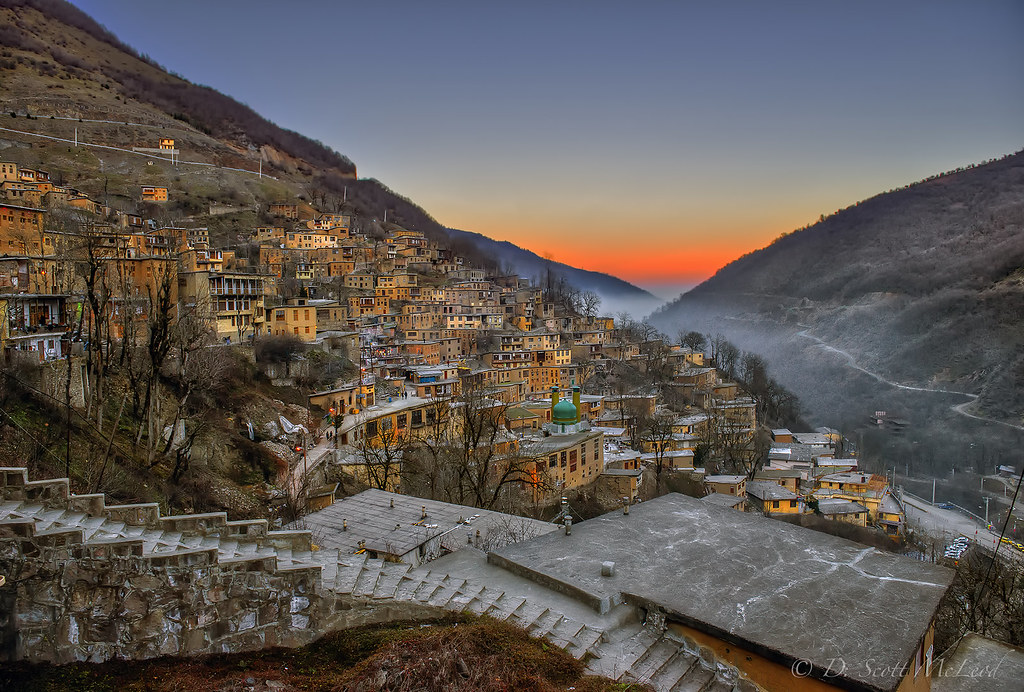
Masuleh Village (House Roofs Are Used As Streets), Sardar-e Jangal District, Fuman County, Gilan Province, Iran.

Masuleh is a village in the Sardar-e Jangal District, in Fuman County, Gilan Province, Iran. At the 2006 census, its population was 554 individuals from 180 families. Historical names for the city include Māsalar and Khortāb. It was founded in the 10th century AD. Masuleh is approximately 60 km southwest of Rasht and 32 km west of Fuman. The village is 1,050 meters above sea level in the Alborz (or Elburz) mountain range, near the southern coast of the Caspian Sea. The village itself has a difference in elevation of 100 meters.

Although it has been written that the community was established around 10 AD, the province of Gilan has a long history. The first village of Masuleh was established around 1006 AD, 6 km northwest of the current city, and it is called Old-Masuleh (Kohneh Masuleh in Persian). People moved from Old-Masuleh to the current city because of pestilence and attacks from neighbouring communities. Masouheh-Rood-Khan is the river passing through the city, with a waterfall located just 200 meters away from the village. It's cut-off by snow during the winter months. Fog is the predominant weather feature of Masuleh.

Masuleh’s architecture is unique. The buildings have been built into the mountain and are interconnected. Courtyards and roofs both serve as pedestrian areas similar to streets. Masuleh does not allow any motor vehicles to enter, due to its unique layout. It is the only city in Iran with such a prohibition. However, the small streets and many stairs simply wouldn't make it possible for vehicles to enter. The spectacular architecture of Masuleh is popularly known as "The yard of the building above is the roof of the building below".

Yellow clay coats the exterior of most buildings in Masuleh. This allows for better visibility in the fog. Buildings are mostly two stories (1st floor and 'ground' floor) made of adobe, rods and bole. A small living room, big guest room, winter room, hall, WC and balcony are usually found in 1st floor. A cold closet, barn and stable are located on the floor below, which are connected to the upper floor by several narrow steps inside the building. There are four main local communities at the city named: "Maza-var" (meaning beside the Mosque) at the south, "Khana-var" (beside homes) at the East, "Kasha-sar" (stretched on top) at the North, and, "Assa-mahala" (Assad community) at the West. Apparently, down town is the Market (Bazaar) area and also the main mosque of the city, named "O-ne-ben-ne Ali" (Awn Ibn Mohammad Ibn Ali Ibn. Abi Taleb) built in 969 AD.


Due to avoiding utilization of human figures and abstaining from idolatry, decorations have specific geometry in Islamic art and architecture. One of the striking characteristics of the knots (girih) that has caused to dynamicity throughout its thousand-year history is its regeneration and diversification of the diverse geometric properties. Girih tiling decoration is part of geometric arts in the traditional buildings of the historic town of Masouleh dates back to eight hundred years. Traditional and local architects of this historical town have adopted special and intellectual plans for creating visual attractions in expression and creation of girih tiling in the walls of the monuments. One of these valuable solutions is diverse geometric decorations patterns .Since the main facades of the houses in this town are directly located in the sunrise direction and it is accepted landscape for the citizens of this historical town, thus the artists have shown their art and style in this part of the monument and built beautiful and harmonic diverse wooden windows and variety of these patterns are seen in all five neighborhoods in this town. Girih tiling consists of straight and broken lines on a regular basis that could be reasonably expanded in the surface. Geometric designs (both normal and abnormal) and purely geometric interlaced patterns involve mental imaginary forms which are essentially superior to the perception- based naturalistic images. The patterns were not aimed to capture the reality perceived through the eyes, but they were supposed to create a glimpse of astonishing beauty in the artist’s creative mind or soul. Due to avoiding utilization of human figures and abstaining from idolatry, decorations have specific geometry in Islamic art and architecture. One of the striking characteristics of the knots (girih) that has caused to dynamicity throughout its thousand-year history is its regeneration and diversification of the diverse geometric properties. Girih tiles are used in Islamic art and architecture. Iranian Chinese Knotting is one of is one of traditional fields and professions that depends on geometrical patterns and on the first encounter, the spectator, is subconsciously affected by its discipline. Geometrical patterns, which are the source for the art Chinese Knotting, usually contain a polygon star in the middle (the Shamseh) and some other geometrical figures so that they can cover the remaining space. Chinese knotting is not specifically a certain decoration or a means of conveying the emotions of the artist, but also the point of making them regarding to two ways: acting on the basis of their own knowledge and guiding others towards this knowledge. When a spectator looks upon the works of Chinese Knotting, they’re first affected by its beauty and especially its discipline, but after some more contemplation they are driven into the art’s mystical meanings. Girih tile is a part of Islamic architecture and art while its different types are used in the following arts: Wood carving, tiling, plaster, Khātam, brick work, mirror work, stone work and in carpentry as fences, door and window, wooden decorations and wood carving of Minbar and in blacksmith Iranian architecture. Girih tile is an intelligent interaction of aesthetics and function. Islamic artists have applied local materials in accordance to the functional requirements and cultural issues of each region. The valuable examples of this art are observed in historical city of Masoule located in the mountainous area of Masoule in Gilan (Iran). Wood is one of the highly applied materials in traditional architecture of Gilan with its different types. One of the greatest arts is seen in the historical city of Masoule with Girih tiles. Wood is used in this region due to its climatic condition and the need to a good thermal isolation against heat and cold weather. Also, wood is the first material being applied in openings. Girih tiles decorations in this historical city are abundant in the buildings while their main façade is to the south. One of the advantages of using Girih tiles in openings of this historical city is to control the direct light in different seasons of year. The aesthetic aspect is on the second priority. The beauty of Girih tiles, their coordination and part to total tendency in all openings have improved the unity and beauty of the historical buildings of Masoule. Sash window, other meshes and Telar with combination of decorative plants in the façade of buildings in Masoule have increased the aesthetics of this city. Historical city of Masoule is a good model for sustainable architecture and its final aim is respecting the culture and friendly relationship with nature and improving the life style of its residents.


Their are many other places to visits at Masuleh -

  • Museum of Anthropology Masuleh: Established in 2002 and incorporates the history of Masuleh and its people. 
  • Forest park: Masouleh Forest Park is one of the most beautiful forest parks in northern Iran and even in the Middle East. The variety of plants in this park is very large and trees like rush, alder, hornbeam, hazelnut, as well as herbs are seen in it. 
  • Waterfalls kooshm and larcheshme and kourbar.

Masuleh also has its own beauties in winter and tourists can enjoy its beauties in this season as well.

The Bo-Kaap, Cape Town, South Africa

The Bo-Kaap is an area of Cape Town, South Africa formerly known as the Malay Quarter. It is a former racially segregated area, situated on the slopes of Signal Hill above the city centre and is a historical centre of Cape Malay culture in Cape Town. The Nurul Islam Mosque, established in 1844, is located in the area.

Bo-Kaap is known for its brightly coloured homes and cobble stoned streets. The area is traditionally a multicultural neighbourhood, and 56.9% of its population identify as Muslim. According to the South African Heritage Resources Agency, the area contains the largest concentration of pre-1850 architecture in South Africa, and is the oldest surviving residential neighborhood in Cape Town.

In 1760 Jan de Waal bought a block of land at the foot of Signal Hill, between Dorp and Wale Streets. A year later he obtained an adjacent parcel, extending his holding to Rose/Chiappini/Shortmarket Street. Starting in 1763, de Waal built several small “huurhuisjes” (rental houses) on this land, which he leased to his slaves. The first three are at 71 Wale Street (now the Bokaap Museum), above Buitengracht Street, and 42 Leeuwen Street respectively.

Skilled Muslim labourers called Mardijkers moved to the Cape from Southeast Asia and lived in the Bo-Kaap Because the aboriginal tribes in the (Cape Town) area resisted the Dutch, slaves were initially imported from Malaysia, Indonesia and other parts of Africa, hence the name “Malay”. Most of the new residents were Muslim, and several mosques were built in the area. The first one was Auwal Mosque, in Dorp Street in 1794. Between 1790 and 1825 more housing in both the Cape Dutch and Cape Georgian styles was built for the expanding population of tradesmen, craftsmen, and artisans. More Muslims continued to move into the area, including a wave of political exiles from Java and Ceylon circa 1820.After the emancipation in 1834 and the arrival of liberated slaves, developers constructed numerous rows of narrow, deep huurhuisjes. 


The brightly coloured facades are attributed to an expression of freedom by the new homeowners, as all the houses were painted white while on lease, although it appears that the tradition of brightly coloured homes appeared at some point in the late 20th century, rather than earlier. Although the area has always been a centre of Cape Malay culture, until the implementation of the Apartheid Group Areas Act, it also had residents of other ethnicities. These included Indians, non-Muslim Coloureds, Filipinos, Africans, Portuguese and Italians at different times. Historically, the Bo-Kaap was larger than its current extent.

During Apartheid, the area was not bulldozed, unlike nearby District Six, however non-Malay residents were forcibly removed in accordance with the Group Areas Act, in an effort by a sympathetic apartheid government official (I. D. du Plessis) to preserve the Malay character of the area. Preservation of the area began in 1943 when 15 houses were restored by a group of prominent citizens, with the support of the Historical Monuments Commission. In 1966 a portion of the area was designated as a National Monument. From 1971 the City Council began restoring houses and streetscapes, with 48 units completed by 1975.

As a result of Cape Town's economic development and expansion, and after the demise of forced racial segregation under apartheid, property in the Bo-Kaap has become very sought after, not only for its location but also for its picturesque cobble-streets and unique architecture. Increasingly, this close-knit community is "facing a slow dissolution of its distinctive character as wealthy outsiders move into the suburb to snap up homes in the City Bowl at cut-rate prices". Inter-community conflict has also arisen as some residents object to the sale of buildings and the resultant eviction of long-term residents.


In May 2019, 19 sites in the Bo-Kaap area were declared National Heritage Sites by the South African Minister of Arts and Culture. The announcement followed  the City of Cape Town's council's March 2019 approving of the inclusion of the Bo-Kaap area in a Heritage Protection Overlay Zone (HPOZ), which will incorporate around 600  privately-owned homes. The City received over 2,000 letters from members of the public, a strong majority of which were in support of the new Heritage Zone. The HPOZ stretches to the Table Mountain National Park, and includes the northern verges to the northwest of Strand Street as well as Buitengracht Street, between the intersections with Carisbrook Street and Strand Street.

The 19 sites became official National Heritage Sites through a declaration by the South African Heritage Resources Agency, under the National Heritage Resources Act (No 25 of 1999). Objectives of the Heritage Zone include conserving the Bo-Kaap heritage by encouraging owners to retain and rehabilitate the existing residential buildings; ensuring new developments in the area complement existing landscape; and promoting social and cultural traditions in the area.

The museum, whose building dates back to the 1760s, is the oldest house in the area still in its original form. It highlights the cultural contribution made by early Muslim settlers, many of whom were skilled tailors, carpenters, shoe makers and builders. It contains 19th century furnishings which include a fine Cape drop-leaf dining table, Cape Regency-style chairs and a bridal chamber decorated to match the bride's dress. The museum is distinguishable by its voorstoep, a type of front terrace with a bench at each end emphasizing the polarizing aspect of Cape Muslim culture. The museum exhibits the lifestyle of a prosperous 19th-century Cape Muslim family along with black-and-white photographs of daily life in the area.