May 30, 2020

Preikestolen, Municipality of Strand in Rogaland County, Norway

Preikestolen or Prekestolen  is a tourist attraction in the municipality of Strand in Rogaland county, Norway. Preikestolen is a steep cliff which rises 604 metres (1,982 ft) above the Lysefjorden. Atop the cliff, there is an almost flat top of approximately 25 by 25 metres (82 ft × 82 ft). Preikestolen is located near the Western part of the fjord, and on its North side.

Tourism at the site has been increasing in the early 21st century, with between 150,000 and 200,000 visitors in 2012 making it one of the most visited natural tourist attractions in Norway. BASE jumpers often leap from the cliff. Due to its increased popularity, there is currently a project under way to improve the most used path to the site - a 3.8-kilometre (2.4 mi) long hike. 

he old local name of the site is Hyvlatonnå . The name Prekestolen (without the i) was coined around the year 1900 when the local tourist organisation, Stavanger Turistforening wanted to promote the site for trekking. The "i" was added later to concord with Nynorsk, the official local form of Norwegian, and the site is now known both locally and officially as "Preikestolen." 


Preikestolen is located in the southern part of the Ryfylke district in Rogaland county in Western Norway. The city of Stavanger, the fourth largest in Norway, with a number of direct flights between European cities, is located 25 kilometres (16 mi) from the site, and the parking facility for Preikestolen is located about one hour from Stavanger by ferry and car.  Access to Preikestolen from Stavanger is via the Norwegian National Road 13 (Rv13) and the ferry from Tau. From the south, access is by the Rv13 through Sandnes via the ferry from Lauvvika to Oanes. The road is usually open and the ferries running year-round. However, due to snow, it is not always possible to do the hike to the top in the winter.

The road to the site ends in the municipality of Strand, just south of the town of Jørpeland at a parking facility at the Preikestolen Fjellstue, with a trail extending from the parking facility to the site. A round-trip hike to Preikestolen from the closest car park takes about 3–4 hours for someone of average fitness.

The walk to Preikestolen is very steep in places. The path starts at the Preikestolhytta, at an elevation of approximately 270 metres (890 ft) above sea level, and climbs to 604 metres (1,982 ft). The walk takes 2–3 hours depending on traffic along the trail, experience, and fitness level. Even though the elevation differential is only 334 metres (1,096 ft) and the walk is not particularly long, about 3.8 kilometres (2.4 mi) each way, the total elevation gain and loss over the course of the hike is more than one might initially expect, as the path climbs and descends various ridges. The walk is more difficult in winter and spring when there is snow and ice.


Alternative access is available via a path from Bratteli - a stop for the tourist ferry from Lauvvik to Lysebotn that passes beneath the Pulpit Rock. This walk is more demanding, and takes 4–5 hours each An alternative is to sail through the Lysefjorden, with trips running year-round. Outside of summer, the weather may be wet and cold, and butts may obstruct views of the cliff. The ship stops at several small docks on the way in and out, including a layover at the end of the Lysefjorden at the village of Lysebotn In early April 2013, a project started to improve the path up to Preikestolen as the old one was so small that it often caused "delays", and at some points on the path it was sometimes impossible to get through. By August 2014, the path was completed. Access to the plateau was improved, and traffic on the way up and down is now much less delayed because of bottlenecks.The cliff overlooks the valleys of the Ryfylke region. The mountains surrounding the cliff reach heights of up to 843 metres (2,766 ft). Some of the hilltops have plains which are interspersed with lakes. Nearby, close to the end of the Lysefjord, is the 1,110-metre (3,640 ft) tall mountain Kjerag which is also a hiking destination. Some tourists elect to forego trips to Preikestolen and go to Kjerag instead.

 In popular culture
  • A granitesculpture of the cliff was erected in the town Langeskov in Denmark to commemorate its twin town of Forsand.
  • In the final scene of the final episode of the second season of Vikings the main character, Ragnar Lothbrok, is seen sitting atop Preikestolen.
  • Compressed air from Lysefjorden/Preikestolen is being sold in cans, mostly to China.
  • The final fight scene (from 2h:10m to 2h:15m) in Mission: Impossible - Fallout features Tom Cruise climbing the face of the cliff at Preikestolen, although in the movie, it's supposed to be in India in then Kashmir now Laddakh union territory.
  • A song Amali Thumali from a movie KO Tamil movie (2011) was shot in Preikestolen. After this song, this place became popular among the South Indian people for tourism.
  • A set was played on top of the cliff by Einmusik b2b Jonas Saalbach for Cercle.

May 27, 2020

Bhimkund: A Mystical Natural Wonder in the Heart of Madhya Pradesh

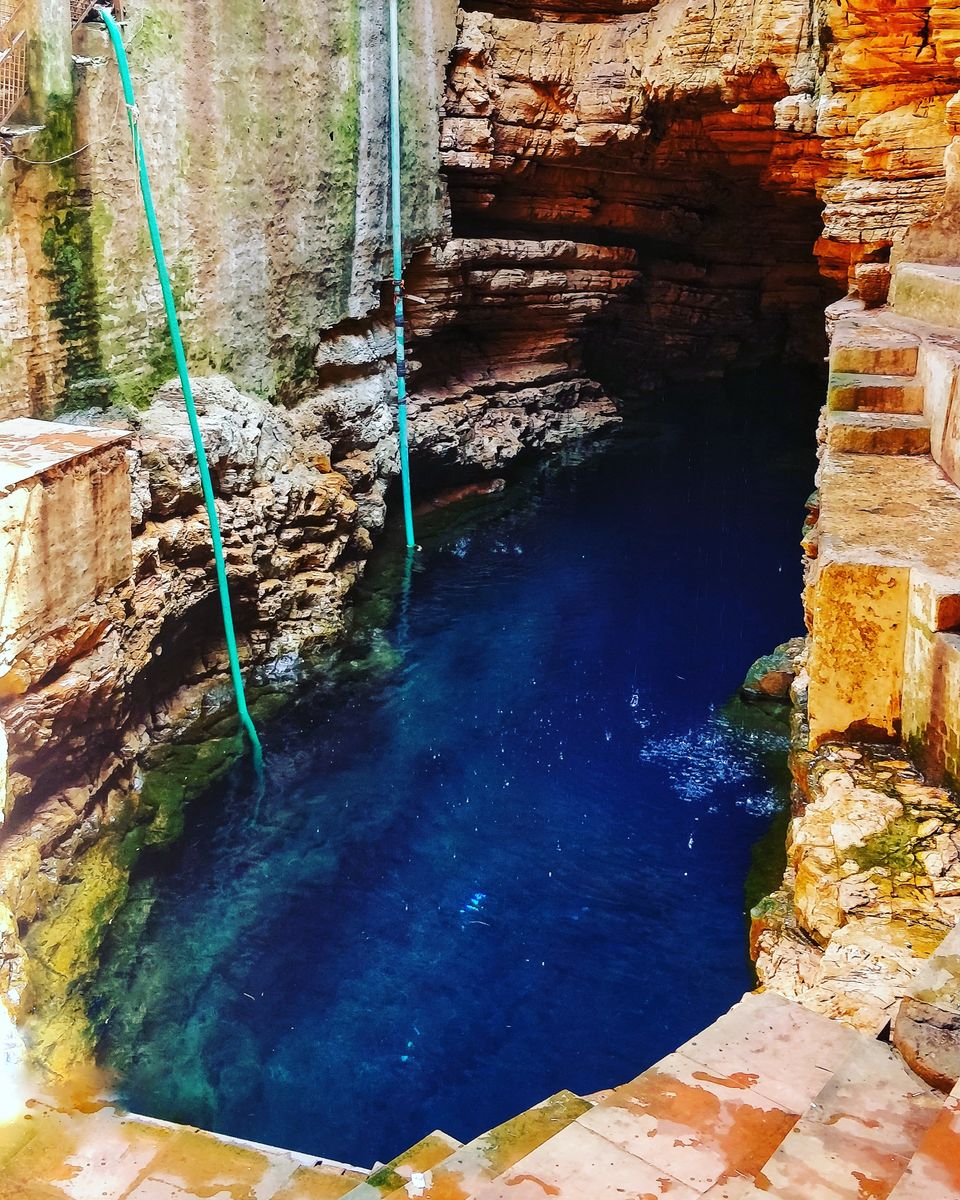
Bhimkund, a mysterious and enchanting natural water tank, is located in the Chhatarpur district of Madhya Pradesh, India. Rich in mythology, geological intrigue, and breathtaking natural beauty, this place attracts travelers, pilgrims, and adventurers alike.

Bhimkund

History and Mythological Significance

Bhimkund derives its name from Bhima, one of the Pandavas from the Indian epic Mahabharata. According to legend, during their exile, Draupadi fainted due to thirst. To quench her thirst, Bhima struck the ground with his mace, and water gushed out, forming this tank. This mythological connection adds a spiritual aura to the site.

Natural Features

Bhimkund is renowned for its mesmerizing blue water, which appears almost otherworldly. It is a vertical water tank, surrounded by rocky cliffs and lush greenery. Key features include:

  1. Crystal Clear Water: The water is so clear that the bedrock is visible even at significant depths.
  2. Depth: The tank is said to be bottomless, and scientific studies have not yet determined its exact depth.
  3. Unique Geology: The site’s formation is attributed to a natural limestone sinkhole, making it geologically significant.
Bhimkund

Activities

  1. Photography: Capture the scenic beauty and the vibrant blues of the water.
  2. Spiritual Visits: Many consider the tank sacred and perform rituals here.
  3. Adventure: The surrounding cliffs and rugged terrain offer a moderate trekking experience.
  4. Picnics: Ideal for a day trip with family or friends.

Tips for Visitors

  • Wear comfortable footwear for climbing the rocky terrain.
  • Carry your own food and water, as there are limited facilities nearby.
  • Avoid littering and respect the natural surroundings.
  • If visiting for rituals, check for local guidelines and timings.
  • Be cautious near the water tank due to its depth.
Bhimkund

The Legend Behind Bhimkund

The name Bhimkund originates from the Indian epic Mahabharata, linking it to Bhima, the second Pandava.

  • The Story: During their exile, the Pandavas wandered through the arid lands of Madhya Pradesh. Draupadi, overcome with thirst, fainted in the scorching heat. In his desperation, Bhima struck the ground with his mace, causing water to burst forth. This miraculous spring became known as Bhimkund, and to this day, it is considered a symbol of divine intervention.
  • Cultural Reverence: Locals regard Bhimkund as sacred, and many believe its waters possess healing properties.

Location and Surroundings

  • Coordinates: Bhimkund is situated at 24.3483° N, 79.5213° E.
  • Proximity:
    • 78 km from Chhatarpur
    • 90 km from Khajuraho
    • 40 km from Panna
  • Setting: Hidden amidst rocky cliffs and dense vegetation, the site offers an oasis-like feel, far removed from the bustling modern world.
Bhimkund

Geological Marvel: What Makes Bhimkund Unique

  1. Bottomless Mystery:
    Bhimkund is famously believed to be bottomless. Despite several scientific attempts to measure its depth, no definitive result has been achieved. Some studies suggest the water extends over 100 meters, while others speculate a connection to subterranean rivers.

  2. Water Clarity and Color:
    The water remains crystal clear throughout the year, exhibiting a stunning shade of deep blue due to natural light refraction and minimal sedimentation.

  3. Natural Formation:
    Bhimkund is a vertical limestone sinkhole, formed over thousands of years by geological erosion. Its steep rocky walls make it a natural amphitheater for visitors.

  4. Weather and Tides Connection:
    The water level in Bhimkund rises mysteriously during natural calamities, such as tsunamis or earthquakes. This phenomenon adds to its enigma, leading locals to believe it has a supernatural connection.

Best Time to Visit

  • Ideal Season: October to March is the best time to visit, offering pleasant weather and clear skies.
  • Monsoon Alert: Avoid the monsoons (July–September) as the area becomes slippery and hazardous.
  • Seasonal Highlights: Winters (December–January) enhance the beauty of the surrounding greenery and make the trek more comfortable.
Bhimkund

How to Reach Bhimkund

  1. By Air:
    The nearest airport is in Khajuraho, approximately 90 km away. Khajuraho has flights connecting to major cities like Delhi and Varanasi.

  2. By Train:
    Chhatarpur Railway Station is the closest railhead, situated about 78 km away. From there, local taxis or buses can be hired.

  3. By Road:
    Bhimkund is well-connected by road. Private taxis from Chhatarpur, Khajuraho, or Panna are the most convenient option. Public buses also operate, albeit less frequently.

What to Do at Bhimkund

  1. Explore the Mystical Tank:
    Admire the pristine waters and the geological marvel of the vertical tank. Stand on the rocky edges and take in the breathtaking view.

  2. Take a Spiritual Dip:
    Many believe that taking a dip in Bhimkund cleanses the soul and heals ailments. Pilgrims often visit for this purpose.

  3. Photography and Videography:
    The unique interplay of light, water, and rocky formations makes Bhimkund a paradise for photographers. Early mornings provide the best natural lighting.

  4. Trekking and Nature Walks:
    The rugged terrain and surrounding forested areas are perfect for short treks. The trail offers panoramic views of the countryside.

  5. Attend Local Rituals:
    On auspicious occasions, locals gather to perform rituals and celebrate the spiritual significance of Bhimkund.

    Bhimkund

Nearby Attractions

Enhance your visit to Bhimkund by exploring these nearby gems:

  1. Khajuraho Temples:
    A UNESCO World Heritage Site, renowned for its intricate carvings and erotic sculptures, located just 90 km away.

  2. Panna National Park:
    Famous for its tigers, waterfalls, and rich biodiversity, this park is 40 km from Bhimkund.

  3. Raneh Falls:
    About 75 km away, these falls are celebrated for their stunning volcanic rock formations and cascading water.

  4. Ken Gharial Sanctuary:
    Home to the endangered gharial crocodiles, this sanctuary is an excellent spot for wildlife enthusiasts and is near Panna National Park.

Practical Travel Tips

  1. Footwear: Wear sturdy shoes for trekking and climbing on rocky terrain.
  2. Food and Water: Carry your own supplies, as there are limited facilities nearby.
  3. Safety: Avoid venturing too close to the water edges, as the depth and currents can be dangerous.
  4. Cultural Sensitivity: Respect the sanctity of the site by adhering to local customs and avoiding disruptive behavior.
  5. Eco-Friendly Travel: Do not litter and contribute to preserving the pristine environment of Bhimkund.

Folklore and Superstitions

The mystique of Bhimkund extends beyond mythology. Locals narrate tales of divine apparitions and unexplained phenomena. Some believe the tank serves as a passage to the underworld, while others attribute its rising water levels to warnings from nature.

Conclusion

Bhimkund is not just a destination; it is an experience that blends natural beauty, mythological depth, and spiritual tranquility. Whether you’re drawn by the allure of its endless waters, the whispers of ancient legends, or the tranquility of its surroundings, Bhimkund promises an unforgettable journey. For those seeking a unique and mystical adventure, this hidden gem in Madhya Pradesh is a must-visit.

Bhimkund

Bhimkund

May 25, 2020

The Koh-i-Noor (World Largest Diamond), London

The Koh-i-Noor also spelt Kohinoor and Koh-i-Nur, is one of the largest cut diamonds in the world, weighing 105.6 carats (21.12 g). It is part of the British Crown Jewels.

Probably mined in Kollur Mine, India, during the period of the Delhi Sultanate, there is no record of its original weight – but the earliest well-attested weight is 186 old carats (191 metric carats or 38.2 g). The diamond was part of the MughalPeacock Throne. It changed hands between various factions in south and west Asia, until being ceded to Queen Victoria after the British annexation of the Punjab in 1849.

Originally, the stone was of a similar cut to other Mughal-era diamonds, like the Darya-i-Noor, which are now in the Iranian Crown Jewels. In 1851, it went on display at the Great Exhibition in London, but the lacklustre cut failed to impress viewers. Prince Albert, husband of Queen Victoria, ordered it to be re-cut as an oval brilliant by Coster Diamonds. By modern standards, the culet (point at the bottom of a gemstone) is unusually broad, giving the impression of a black hole when the stone is viewed head-on; it is nevertheless regarded by gemologists as "full of life".

Because its history involves a great deal of fighting between men, the Koh-i-Noor acquired a reputation within the British royal family for bringing bad luck to any man who wears it. Since arriving in the UK, it has only been worn by female members of the family. Victoria wore the stone in a brooch and a circlet. After she died in 1901, it was set in the Crown of Queen Alexandra, wife of Edward VII. It was transferred to the Crown of Queen Mary in 1911, and finally to the Crown of Queen Elizabeth (later known as the Queen Mother) in 1937 for her coronation as Queen consort.

Today, the diamond is on public display in the Jewel House at the Tower of London, where it is seen by millions of visitors each year. The governments of India, Pakistan, Iran, and Afghanistan have all claimed rightful ownership of the Koh-i-Noor and demanded its return ever since India gained independence from the UK in 1947. The British government insists the gem was obtained legally under the terms of the Last Treaty of Lahore and has rejected the claims. 


The diamond may have been mined from Kollur Mine, a series of 4-metre (13 ft) deep gravel-clay pits on the banks of Krishna River in the Golconda (present-day Andhra Pradesh), India. It is impossible to know exactly when or where it was found, and many unverifiable theories exist as to its original owner.

The Koh-i-Noor made its first appearance in popular culture in The Moonstone (1868), a 19th-century British epistolary novel by Wilkie Collins, generally considered to be the first full length detective novel in the English language. In his preface to the first edition of the book, Collins says that he based his eponymous "Moonstone" on the histories of two stones: the Orlov, a 189.62-carat (37.9 g) diamond in the Russian Imperial Sceptre, and the Koh-i-Noor. In the 1966 Penguin Books edition of The Moonstone, J. I. M. Stewart states that Collins used G. C. King's The Natural History, Ancient and Modern, of Precious Stones … (1865) to research the history of the Koh-i-Noor.

The Koh-i-Noor also features in Agatha Christie's 1925 novel The Secret of Chimneys where it is hidden somewhere inside a large country house and is discovered at the end of the novel. The diamond had been stolen from the Tower of London by a Parisian gang leader who replaced it with a replica stone.

For More Information- Koh-i-Noor

May 24, 2020

The Pinner Qing Dynasty Vase: A Masterpiece of Chinese Porcelain

The Pinner Qing Dynasty Vase is one of the most fascinating and historically significant artifacts from the Qing Dynasty (1644–1912), known for its intricate craftsmanship and cultural importance. The Pinner Qing Dynasty Vase is a stunning example of Chinese artistry, representing the height of porcelain craftsmanship during the Qing Dynasty. Found in Pinner, a suburban area of London, this vase gained international fame due to its exceptional artistry, rarity, and fascinating story.

Pinner Qing Dynasty Vase is an elegant Chinese vase featuring gold banding and a fish motif, the Pinner vase bears the imperial seal and thus is thought to have originated from the imperial kilns of the Qing dynasty, made for the Chinese emperor Qianlong between 1736 and 1795. The vase dated from the period of the emperor Qianlong, who reigned from 1735 to 1796, at the height of the Qing dynasty. 

A golden vase featuring fish and flower motifs, the Pinner Qing Dynasty Vase is widely praised for its purity and beauty. Pinner Qing Dynasty Vase has conquered our list of the most expensive antiques in the world. Painted sky blue and imperial yellow and adorned with medallions depicting leaping goldfish, the 16-inch vase dates from the Qing dynasty, a time when Chinese porcelain-making was at its pinnacle. Made for the personal collection of Emperor Qianlong and bearing the imperial seal, experts said it was an exceptional piece. This exquisite Qing Dynasty vase was strangely discovered in Pinner, London, England and is a mystery how it got there all the way from China.
 
The Pinner Qing Dynasty Vase

Historical Context

  • The Qing Dynasty (1644–1912):

    • The Qing Dynasty, China’s last imperial dynasty, witnessed unprecedented advancements in art, especially during the reigns of Kangxi, Yongzheng, and Qianlong.
    • Porcelain became a symbol of imperial prestige, and the production was heavily regulated to ensure only the finest pieces reached the emperor and his court.
    • The kilns at Jingdezhen, known as the "Porcelain Capital," played a central role in producing masterpieces.
  • Porcelain as Prestige:

    • Porcelain items from the Qing Dynasty were often reserved for the imperial family or gifted to foreign dignitaries.
    • Designs reflected themes of prosperity, longevity, and imperial power, often drawing inspiration from Confucian, Buddhist, and Daoist traditions.
The Pinner Qing Dynasty Vase

Design and Craftsmanship

  • Material and Technique:

    • The vase is crafted from the finest porcelain, a combination of kaolin and petuntse clay, fired at high temperatures to achieve its delicate yet durable structure.
    • The vase was likely created in the renowned Jingdezhen kilns, famous for their precision and innovation.
  • Iconography:

    • Dragons: Often depicted coiling around the vase, dragons symbolize imperial authority, strength, and protection.
    • Floral Motifs: Lotus flowers, peonies, and chrysanthemums are featured, symbolizing purity, wealth, and resilience.
    • Clouds and Waves: These elements, often painted in flowing patterns, represent harmony and the connection between heaven and earth.
  • Color Palette:

    • The vase features the "famille rose" (fencai) enameling technique, characterized by soft, pastel shades achieved using a lead-based glaze mixed with pigments.
    • Golden highlights emphasize the vase's imperial association, as gold was reserved for the most prestigious pieces.
  • Shape and Proportions:

    • The vase’s elongated neck, rounded shoulders, and flared rim follow traditional Qing designs.
    • Its balanced proportions suggest it was intended as a decorative piece, possibly for the emperor’s palace or a temple.
  • Markings:

    • On the base, a six-character reign mark is inscribed, identifying the piece as from the Qianlong period (1736–1795), a time known for artistic perfection.
The Pinner Qing Dynasty Vase

What Makes It Unique

  1. Exquisite Craftsmanship:
    • The vase’s intricate detailing and flawless glazing showcase the skills of the artisans at Jingdezhen, often referred to as the "dream factory" of porcelain.
  2. Cultural Symbolism:
    • The designs are rich in symbolic meaning, reflecting the philosophies and values of Qing China.
  3. Uncommon Provenance:
    • Its discovery in a private collection in England underscores the fascinating history of Chinese art being transported across continents during the 19th and early 20th centuries.
    •  
The Pinner Qing Dynasty Vase
 
 The Auction and Legacy
  • Record-Breaking Sale:

    • The vase sold for over £9 million (including auction fees), a testament to its rarity and appeal.
    • Bidding wars among collectors, museums, and art dealers highlighted the vase's cultural and financial value.
  • Cultural Repatriation Debate:

    • The sale reignited discussions about the origins of Chinese artifacts in Western collections, raising questions about historical trade and colonial acquisitions.

Impact on Art and Collecting

  1. Renaissance of Qing Porcelain:
    • The discovery has spurred renewed interest in Qing Dynasty porcelain, with collectors actively seeking similar treasures.
  2. Educational Value:
    • The vase serves as an educational piece, teaching us about the sophisticated techniques, symbolic artistry, and cultural values of the Qing era.
  3. Global Appreciation:
    • The Pinner Vase underscores the universal appeal of Chinese porcelain and its importance as a bridge between cultures.

Conclusion

The Pinner Qing Dynasty Vase is more than an artifact; it is a story of artistry, history, and cultural exchange. Its impeccable craftsmanship and symbolic design reflect the grandeur of the Qing Dynasty, while its discovery in Pinner offers a modern narrative of rediscovery and appreciation. The vase’s journey from imperial China to a quiet London suburb exemplifies how art transcends time and geography, continuing to captivate and inspire.

May 23, 2020

Sun City (The Luxury Resort and Casino), North West Province, South Afric

Sun City or Lost City is a luxury resort and casino, situated in the North West Province of South Africa. It is located between the Elands River and the Pilanesberg, about 140 km northwest of Johannesburg, near the city of Rustenburg. The complex borders the Pilanesberg Game Reserve.
 
Sun City was developed by the hotel magnate Sol Kerzner as part of his Sun International group of properties. It was officially opened on 7 December 1979, then located in the Bantustan of Bophuthatswana. As Bophuthatswana had been declared an independent state by South Africa's apartheid government (although unrecognised as such by any other country), it could provide entertainment such as gambling and topless revue shows, which were banned in South Africa. Those factors, as well as its relatively-close location to the large metropolitan areas of Pretoria and Johannesburg, ensured that Sun City soon became a popular holiday and weekend destination.

The United Nations had imposed a cultural boycott on South Africa in condemnation of apartheid. To overcome this, Kerzner offered substantial financial incentives to performing artists to use Sun City as a venue. Several acts disregarded the boycott and performed at the venue, such as the Beach Boys, Linda Ronstadt, Cher, Millie Jackson, Liza Minnelli, Frank Sinatra (1981), Paul Anka, Status Quo, Rod Stewart (July 1983), and Elton John (October 1983).

British rock band Queen's series of performances at the venue in October 1984 in transgression of the boycott caused considerable controversy, prompting criticism in the British music press, a fine from the Musicians' Union, and Queen's inclusion on the United Nations' blacklisted artists. Following the criticism, Queen defended their decision, citing the fact that they had insisted they played only to desegregated audiences. They also donated to a school for the deaf and blind.

On 25 October 1980, Sun City's "Superbowl" hosted a racially mixed world heavyweight boxing championship fight between champion American Mike Weaver and challenger South African Gerrie Coetzee. It was won by Weaver by thirteenth-round knockout. The fight was for Weaver's World Boxing Association world heavyweight title.

In 1985, E Street Band guitarist Steven Van Zandt made the venue the focus of his music-industry activist group Artists United Against Apartheid. Forty-nine top recording artists collaborated on a song called "Sun City", in which they pledged they would not perform at the resort because of their opposition to apartheid. Additionally, Simple Minds included the song as part of a live medley on their Live in the City of Light double album in 1987. 


Sun City has continued since Bophutatswana was re-incorporated in the new South Africa in 1994.

The resort has four hotels:
  • Soho Hotel (Formerly known as Sun City Hotel or The Main Hotel)
  • Cascades Hotel
  • The Cabanas;
  • The Palace of the Lost City.
Sun City has the Vacation Club which is a hotel but also sold in a timeshare scheme. Sun City also has two international-standard 18-hole golf courses, the Gary Player Country Club and the Lost City Golf Course, both designed by Gary Player. The Gary Player Country Club is home to the Nedbank Golf Challenge (formerly the Nedbank Million Dollar Golf Challenge) that is held annually.

The Sun City resort has hosted various concerts and events, including the Miss South Africa and Miss South Africa Teen Pageant. These pageants take place annually in Sun City's Super Bowl Arena and the Valley of Waves. It also hosted Miss World pageant five times, from 1992–1995 and 2001. The resort was also the site of the Sun City Agreement.

In 2001, Sun City was the site of the 2nd IIFA Awards. Held at the Superbowl Arena, it honoured both artistic and technical excellence of professionals in Bollywood, for that year. Also on that year on 19 May, Irish vocal pop band Westlife held a concert for their Where Dreams Come True Tour supporting their album Coast to Coast.

In 2014, the movie Blended, with Drew Barrymore and Adam Sandler, premiered on the premises after being filmed mostly at the resort. 
 
Today the resort lies in a tranquil basin of an extinct volcano in the Pilanesberg adjacent to South Africa's rich platinum belt. It boasts four hotels, an award-winning golf course and many other attractions for tourists of every ilk.
 
Main Attraction:
  • The Gary Player Golf Course and the Lost City Golf Course, both designed by South African golfing legend Gary Player, are both internationally acclaimed courses. The Gary Player Golf Course is renowned for hosting the annual Million Dollar Nedbank Golf Challenge, whilst the scenic Lost City Golf Course is better known for the almost 40 crocodiles that frequent the 13th hole.
  • The Sun City Resort is at the height of gaming entertainment in South Africa, offering an impressive range of slots and more than forty table games. It also caters for those who don’t prefer gambling, with various bars and restaurants. The children can also visit the gaming arcade or go for a movie while you play.
  • A man-made beach, complete with a 6500 m² wave pool with a 2m wave every ninety seconds, will give you the impression that you are actually on holiday on the sunny coastline of South Africa, not in the remote North West. It is only one of the great attractions available for both children and adults set in the Valley of the Waves, which also includes slides, rides and a food court. 
Their are many other attraction to explore in Sun City.

 For More Information  - Sun City