Aug 13, 2019

Lake Natron, Arusha Region, Tanzania

Lake Natron is a salt or soda lake in Arusha Region in Tanzania. It is in the Gregory Rift, which is the eastern branch of the East African Rift The lake is within the Lake Natron Basin, a Ramsar Site wetland of international significance.

The lake is fed principally by the Southern Ewaso Ng'iro River, which rises in central Kenya, and by mineral-rich hot springs. It is quite shallow, less than three meters (9.8 ft) deep, and varies in width depending on its water level. The lake is a maximum of 57 kilometers (35 mi) long and 22 kilometers (14 mi) wide. The surrounding area receives irregular seasonal rainfall, mainly between December and May totaling 800 millimeters (31 in) per year. Temperatures at the lake are frequently above 40 °C (104 °F).

High levels of evaporation have left behind natron (sodium carbonate decahydrate) and trona (sodium sesquicarbonate dihydrate). The alkalinity of the lake can reach a pH of greater than 12. The surrounding bedrock is composed of alkaline, sodium-dominated trachytelavas that were laid down during the Pleistocene period. The lavas have significant amounts of carbonate but very low calcium and magnesium levels. This has allowed the lake to concentrate into a caustic alkaline brine.


The color of the lake is characteristic of those where very high evaporation rates occur. As water evaporates during the dry season, salinity levels increase to the point that salt-loving microorganisms begin to thrive. Such halophile organisms include some cyanobacteria that make their own food with photosynthesis as plants do. The red accessory photosynthesizing pigment in the cyanobacteria produces the deep reds of the open water of the lake and the orange colors of the shallow parts of the lake. The alkali salt crust on the surface of the lake is also often colored red or pink by the salt-loving microorganisms that live there. Salt marshes and freshwater wetlands around the edges of the lake do support a variety of plants.

Most animals find the lake's high temperature and its high and variable salt content inhospitable. Nonetheless, Lake Natron is home to some endemic algae, invertebrates, and birds. In the slightly less salty water around its margins, some fish can also survive.


The lake is the only regular breeding area in East Africa for the 2.5 million lesser flamingos, whose status of "near threatened" results from their dependence on this one location. When salinity increases, so do cyanobacteria, and the lake can also support more nests. These flamingoes, the single large flock in East Africa, gather along nearby saline lakes to feed on Spirulina (a blue-green algae with red pigments). Lake Natron is a safe breeding location because its caustic environment is a barrier against predators trying to reach their nests on seasonally forming evaporite islands. Greater flamingoes also breed on the mud flats.

The lake has inspired the nature documentary The Crimson Wing: Mystery of the Flamingos by Disneynature, for its close relationship with the Lesser flamingoes as their only regular breeding area.

Two endemic fish species, the alkaline tilapias Alcolapia latilabris and A. ndalalani, also thrive in the waters at the edges of the hot spring inlets. A. alcalica is also present in the lake, but is not endemic.

Aug 11, 2019

The Cordillera Paine, Torres Del Paine National Park, Chile

The Cordillera Paine is a mountain group in Torres del Paine National Park in Chilean Patagonia. It is located 280 km (170 mi) north of Punta Arenas, and about 1,960 km south of the Chilean capital Santiago. It belongs to the Commune of Torres del Painein Última Esperanza Province of Magallanes and Antártica Chilena Region. No accurate surveys have been published, and published elevations have been claimed to be seriously inflated, so most of the elevations given on this page are approximate. Paine means "blue" in the native Tehuelche  language and is pronounced PIE-nay.


The highest summit of the range is Cerro Paine Grande. For a long time its elevation was claimed to be 3,050 m or 3,251 m, but in August 2011 it was ascended for the third time, measured using GPS and found to be 2,884 m.

The three Towers of Paine form the centerpiece of Parque National Torres del Paine. The South Tower of Paine is about 2,500 m in elevation, is now thought to be the highest of the three, although this has not been definitely established. It was first climbed by Armando Aste. The Central Tower was first climbed in 1963 by Chris Bonington and Don Whillans. In 2017, three Belgian climbers, Nico Favresse, Siebe Vanhee and Sean Villanueva O'Driscoll, made the first free ascent up the rock face. The North Tower (about 2,260 m in elevation) was first climbed by Guido Monzino.

Other summits include the Cuerno Principal, about 2,100 m in elevation, and Cerro Paine Chico, which is usually quoted at about 2,650 m.

The range is made up of a yellowish granite underlain by grey gabbro-diorite laccolith and the sedimentary rocks it intrudes, deeply eroded by glaciers. The steep, light colored faces are eroded from the tougher, vertically jointed granitic rocks, while the foothills and dark cap rocks are the sedimentary country rock, in this case flysch deposited in the Cretaceous and later folded.

The Torres del Paine National Park an area of 2,400 km was declared a Biosphere Reserve by the UNESCO in 1978 and receives about 250,000 visitors annually. Trails and some campsites are maintained by Chile's National Forest Corporation, and mountain huts provide shelter and basic services.

The Island of the Dolls, Mexico

The Island of the Dolls, located in the channels of Xochimilco, south of the center of Mexico City, very close to the Estadio Azteca football stadium, is a chinampa of the Laguna de Teshuilo and one of the main attractions of the channels.

Broken and deteriorated dolls of various styles and colors are found throughout the island, originally placed by the former owner of the island, Julián Santana Barrera. Julián believed that dolls helped to chase away the spirit of a girl drowned years ago. Santana drowned as well in the same place in 2001.


he Island of the Dolls, originally owned by Don Julián Santana, is full of dolls hanging from trees and buildings covered with cobwebs and insects. The place was named during the 1950s when the owner began to hang them as protection against evil spirits. Santana was a neighbor of the Barrio de la Asunción, where he used to go to drink pulque after having sold his vegetables, until, due to superstitions, he began to preach the Bible, being expelled from the sector.

According to legend, a young woman drowned entangled among the lilies of the canal and her body was found on the banks of the Santampa chinampas. Don Julián began to experience inexplicable situations so, terrified, he placed dolls that he found in the garbage or in the canals of Cuemanco with the idea that they would scare the soul of the young woman. He also found a doll floating nearby and, assuming it belonged to the deceased girl, hung it from a tree as a sign of respect. After this, he began to hear whispers, footsteps, and anguished wails in the darkness even though his hut hidden deep inside the woods of Xochimilco was miles away from civilization. Driven by fear, he spent the next fifty years hanging more and more dolls, some missing body parts, all over the island in an attempt to appease what he believed to be the drowned girl's spirit.

In 1987, an Eco-tourist rescue was made and the island was found covered with water lily. Since then and after the death of Don Julián, the chinampa became a place of great tourist affluence. The place gained fame after 1943, when Mexican filmmaker Emilio Fernández filmed María Candelaria there, with Dolores del Río and Pedro Armendáriz as protagonists. A significant number of international and local channels have featured articles on the island, including The Huffington Post, Travel Channel and ABC News.

After Barrera’s death in 2001—his body reportedly found in the exact spot where he found the girl’s body fifty years before the area became a popular tourist attraction where visitors bring more dolls. The locals describe it as "charmed" not haunted—even though travelers claim the dolls whisper to them. Professional photographer Cindy Vasko visited the island in 2015 and described it as the "creepiest place [she has] ever visited". The excursion began through maze-like canals, surrounded by lush greenery and singing birds, but soon her boat was slowed down by a swarm of lily pads and the canal fell ominously silent. She told MailOnline: "At the end of the journey, the trajinera turned along a bend in the waterway and I was struck by a surreal vision of hundreds, maybe thousands, of dolls hanging from trees on the tiny island." The dolls are still on the island, which is accessible by boat. The island was featured on the Travel Channel show Ghost Adventures and the Amazon Prime show Lore. It was also featured in BuzzFeed Unsolved.

The island of the dolls is an hour and a half from Embarcadero Cuemanco. The only access is via trajinera. Most rowers are willing to transport people to the island, but there are those who refuse due to superstitions. The journey, approximately one hour, includes a tour of the Ecological Area, the Ajolote Museum, the Apatlaco Canal, the Teshuilo Lagoon and the Llorona Island.

In addition to hundreds of dolls, the island also contains a small museum with some articles from local newspapers about the island and the previous owner. There are a store and three rooms, one of which seems to have been used as a bedroom. In this room is the first doll that Julian collected, as well as Agustinita, his favorite doll.

Some of the visitors place offerings around this doll in exchange for miracles and blessings, some others change their clothes and maintain it as a form of worship.

Aug 4, 2019

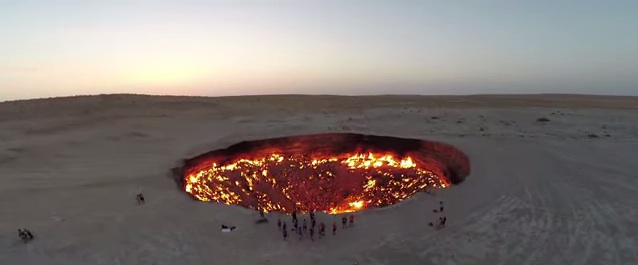
The Door to Hell: Exploring Turkmenistan’s Eternal Flame

The Darvaza Gas Crater, also known as the "Door to Hell," is a captivating and eerie natural wonder located in the Karakum Desert of Turkmenistan. It has fascinated travelers and scientists alike for decades. 

Darvaza gas crater

The Karakum Desert: Home of the Crater

  1. Desert Features:

    • The Karakum Desert spans 350,000 square kilometers (135,000 square miles), covering much of Turkmenistan.
    • The landscape is characterized by dunes, sparse vegetation, and extreme temperatures.
  2. Biodiversity:

    • Despite its arid conditions, the Karakum Desert supports a variety of life, including desert foxes, gazelles, and unique plant species adapted to survive with minimal water.
  3. Nomadic Tribes:

    • Historically, the desert was home to nomadic tribes who relied on camels for transport and sustenance. Today, some local communities still live in traditional ways, herding animals and moving with the seasons.

Overview

  • Name: Darvaza Gas Crater (also referred to as the "Door to Hell" or "Gates of Hell").
  • Location: Near the village of Darvaza in the Karakum Desert, Turkmenistan.
  • Type: A massive burning natural gas crater.
  •  Coordinates: Approximately 40.2528°N, 58.4391°E.
Darvaza gas crater

History and Formation

  • Origin: The crater was created in 1971 during a Soviet drilling operation. Geologists were exploring for natural gas when the ground beneath their drilling rig collapsed, forming a massive sinkhole.
  • Cause of Ignition: To prevent the release of toxic methane gas into the atmosphere, geologists decided to ignite the gas, assuming it would burn off in a few days. However, the fire has been burning continuously for over 50 years.

Additional Historical Details

  1. Pre-Crater Landscape:

    • Before its accidental creation, the site was part of the expansive Karakum Desert, known for its harsh environment and sparse vegetation.
    • The region is rich in natural gas reserves, which led the Soviet Union to conduct extensive drilling operations there in the 1970s.
  2. Soviet Operations:

    • The drilling project was part of broader efforts to harness Turkmenistan’s vast energy resources.
    • The exact details of the operation remain somewhat unclear, as Soviet records are sparse or lost, adding an air of mystery to the crater's origin story. 
       Darvaza gas crater
 Size and Scale

  • Diameter: Approximately 70 meters (230 feet).
  • Depth: Around 30 meters (98 feet).
  • Area: The crater is large enough to be seen from space, making it one of the most distinctive landmarks in the region.

The Science Behind the Flames

  1. What Keeps It Burning?

    • The crater taps into a vast reserve of natural gas, predominantly methane. This flammable gas continuously seeps through cracks in the earth, fueling the flames.
    • Methane burns at a high temperature, creating the bright orange glow that defines the crater.
  2. Geological Significance:

    • The Karakum Desert is one of the world’s largest gas-rich regions. The Darvaza Crater serves as a visible reminder of the area’s immense underground energy reserves.
    • The crater has also become a symbol of the potential risks of resource extraction.
  3. Methane Combustion:

    • Methane, when ignited, releases water vapor and carbon dioxide, both greenhouse gases. While methane is more potent than CO₂ as a greenhouse gas, its combustion reduces its long-term impact on the environment.

The Eternal Flames

  • Burning Phenomenon: The flames are fueled by vast reserves of natural gas beneath the surface. The intense heat and bright orange glow create a dramatic and otherworldly sight, especially at night.
  • Temperature: The temperature near the crater can reach extreme levels due to the constant burning of methane gas.
 Darvaza gas crater

Unique Features

  • Visual Appeal: The crater’s glowing orange flames and billowing smoke create an apocalyptic scene, making it a popular destination for adventurous travelers and photographers.
  • Sounds: Visitors report hearing a low roaring sound caused by the flames and escaping gas.
  • Desert Environment: The crater stands in stark contrast to the barren and arid Karakum Desert, amplifying its mystique.

Tourism at the Crater

  1. Visitor Facilities:

    • While the area around the crater remains relatively undeveloped, some improvements have been made for tourists, including designated camping areas and basic amenities.
    • There are no permanent structures, preserving the remote and wild feel of the site.
  2. Tour Packages:

    • Tour operators in Ashgabat offer guided trips to the crater, often combining it with visits to other attractions in Turkmenistan, such as the ancient ruins of Merv or the marble city of Ashgabat.
  3. Unique Desert Experience:

    • Visitors often combine their trip to the crater with a broader exploration of the Karakum Desert, which includes camel treks, stargazing, and cultural interactions with local communities.
     
    Darvaza gas crater

Environmental Concerns

  • Gas Wastage: The burning of methane gas has led to debates about the environmental impact and the wastage of valuable natural resources.
  • Government Plans: The Turkmenistan government has occasionally discussed plans to extinguish the flames to reduce greenhouse gas emissions and explore the crater’s natural gas reserves, though these plans have not been implemented yet.

Local Legends and Name

  • Door to Hell: Locals refer to the site as the "Door to Hell" due to its fiery appearance and the belief that it resembles an entrance to the underworld.
  • Cultural Significance: While not a religious site, the crater has inspired myths and stories among locals and travelers.

Trivia and Fun Facts

  1. Unexpected Discovery: The crater was formed accidentally and remains a striking example of human impact on natural landscapes.
  2. Unique Ecosystem: Despite the harsh conditions, certain extremophiles (microorganisms) are believed to thrive near the crater, making it a site of scientific interest.
  3. Documentaries: The site has been featured in documentaries by National Geographic and other prominent organizations.
  4. World Record: It is one of the largest and longest-burning gas craters in the world.
Darvaza gas crater

Practical Information for Travelers

  • How to Get There: Most travelers start from Ashgabat, the capital of Turkmenistan, and take a guided tour or rent a 4x4 vehicle to reach the crater.
  • Travel Tips:
    • Bring warm clothing for desert nights, which can be chilly.
    • Pack enough water and snacks for the journey.
    • Consider hiring a local guide for a better understanding of the area.
  • Camping: Many visitors choose to camp near the crater to witness the flames under the starry desert sky.

Photography Tips for Travelers

  1. Nighttime Photography:

    • Use long exposure settings to capture the crater’s fiery glow under the stars. A sturdy tripod is essential for the best results.
  2. Drone Footage:

    • Drones can provide stunning aerial views of the crater, showcasing its size and the surrounding desert.
  3. Golden Hour Shots:

    Visit at sunrise or sunset for dramatic lighting that enhances the fiery hues of the flames against the desert backdrop.
Darvaza gas crater

Future of the Crater

  • The long-term status of the Darvaza Gas Crater remains uncertain. Environmental concerns and Turkmenistan’s efforts to develop its energy resources could lead to changes in its accessibility or existence.
  • By combining these details, you can create a captivating blog post that highlights the allure, mystery, and ecological implications of the Darvaza Gas Crater. Let me know if you'd like to refine or expand on any specific section!

Cultural and Symbolic Aspects

  1. Local Beliefs:

    • The crater is surrounded by myths. Some locals believe it’s a cursed place or a portal to the underworld due to its fiery and foreboding appearance.
  2. A National Symbol:

    • Despite its accidental origins, the Darvaza Gas Crater has become a symbol of Turkmenistan’s abundant natural gas wealth and a point of national pride.

Interesting Comparisons

  1. Other Natural Gas Flares:

    • Similar natural gas flares exist worldwide, but the Darvaza Crater is unique due to its size, longevity, and accessibility.
    • For example, the "Burning Mountain" in New South Wales, Australia, is another long-burning fire, but it’s underground and less visually striking.
  2. Analogies to Volcanic Activity:

    • Visitors often compare the crater to a dormant volcano. While the mechanism is entirely different, the glowing pit and rising heat evoke similar awe and respect for nature’s raw power.

Conclusion

The Darvaza Gas Crater is more than just a geological anomaly. It’s a testament to the unpredictability of human endeavors and nature’s raw power. For those who venture to this remote corner of the world, the "Door to Hell" offers an unforgettable experience, blending awe-inspiring beauty with an eerie sense of mystery.

Whether you’re an adventurer, a photographer, or simply a lover of unique destinations, the Darvaza Gas Crater deserves a spot on your travel bucket list.

Darvaza gas crater

Feb 6, 2019

Los Glaciares National Park, Santa Cruz Province, Argentina

Los Glaciares National Park covers an area of 726,927 ha (7,269.27 km2; 2,806.68 sq mi), making it the largest national park in the country. Established on 11 May 1937,it hosts a representative sample of Magellanic sub polar forest and west Patagonian steppe biodiversity in good state of conservation. In 1981, it was declared a World Heritage Site by UNESCO.

The park's name refers to the giant ice cap in the Andes, the largest outside of Antarctica, Greenland and Iceland, feeding 47 large glaciers, of which 13 flow towards the Atlantic Ocean. In other parts of the world, glaciers start at a height of at least 2,500 m (8,200 ft) above mean sea level, but due to the size of the ice cap, these glaciers begin at only 1,500 m (4,900 ft), sliding down to 200 m (660 ft). Los Glaciares borders Torres del Paine National Park to the south in Chilean territory. 

Los Glaciares owes its name to the numerous glaciers covering roughly half of the World Heritage property. Many of these glaciers are fed by the massive South Patagonian Ice Field, the most extensive South American relict of the glaciological processes of the Quaternary Period. In addition, there are impressive glaciers independent of the main ice field. The property therefore constitutes a massive freshwater reservoir. The Upsala, Onelli and Perito Moreno Glaciers calve into the icy and milky waters of the huge Lake Argentino, which is partly included in the property. The most striking sight is the famous Perito Moreno Glacier. This large glacier blocks a narrow channel formed by Lake Argentino thereby raising the water level temporarily. This in turn causes regular thunderous ruptures of the glacier tongue into the lake.


The mountains hold most of the humidity from the Pacific Ocean, letting through only the ice coldness (annual average of 7.5 °C (45.5 °F)) and creating the arid Patagonian steppe on the Argentine side of the range. This area is habitat for ñandúes, guanaco, cougar, and South American gray fox, the latter of which has suffered from the invasion of the cattle industry and are endangered. The guanaco, while not endangered, has had a dramatic decline in historic population due to large scale grazing of livestock throughout much of Patagonia. There are over 100 species of birds in the area (condors, eagles, and others). Between the ice and the Patagonian steppe there is a fertile area of Magellanic subpolar forests composed mainly of lengas and guindos. Within these more hospitable areas also live huemul deer and torrent duck.

Los Glaciares is a major attraction for international tourists. Starting points of tours are the village of El Calafate at the shore of Lake Argentino but outside the park, where the park's administration has its headquarters, and El Chaltén village in the northern part of the park, at the foot of the Fitz Roy. Other touristic points in the park include Lago del Desierto and Lago Roca.

For more Information - Los Glaciares National Park